Throughout history, the number seven has captured human imagination, symbolizing luck, completeness, and harmony across cultures and traditions.
From the seven wonders of the ancient world to the seven days of creation, this number has repeatedly shown up as a marker of structure and balance.
If you're curious to deepen your knowledge, make sure to explore the enrichment section about number seven in history, located at the bottom of this chapter. ⬇️
Seven isn't just a number.
It's a cultural phenomenon that transforms complexity into clarity.
In the world of product management, this simple digit becomes a powerful lens.
How?
By breaking down complicated processes into clear steps.
I learned this lesson through years of experience, watching teams struggle with complex processes until we embraced the magic of seven.
Imagine turning abstract strategies into punchy communication.
"What's the status of 3️⃣?" became more than words - it was our team's secret code.
A shorthand that cut through meetings, simplified discussions and aligned everyone with remarkable speed.
The beauty lies in its simplicity.
Seven isn't just a number.
It's a tool that breaks down barriers, creates shared understanding, and turns complex ideas into digestible insights. With each iteration, we discovered how seven could transform our approach, making the complicated feel wonderfully straightforward.
Here are some ideas for connecting “Seven” to Product Management and your daily/weekly/monthly routine:
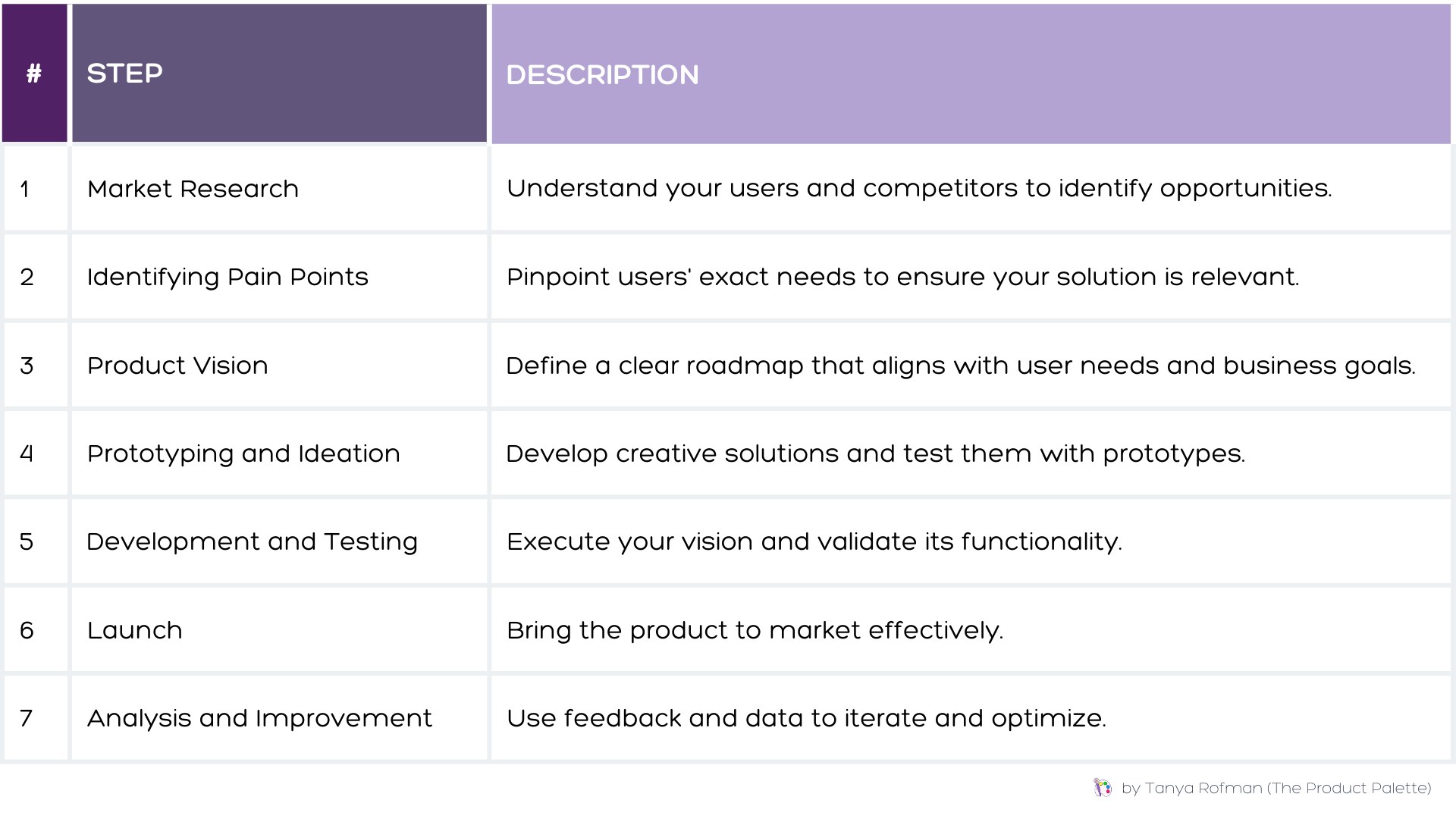
1. Seven Stages of Successful Product Development
These stages form the core of the product lifecycle.
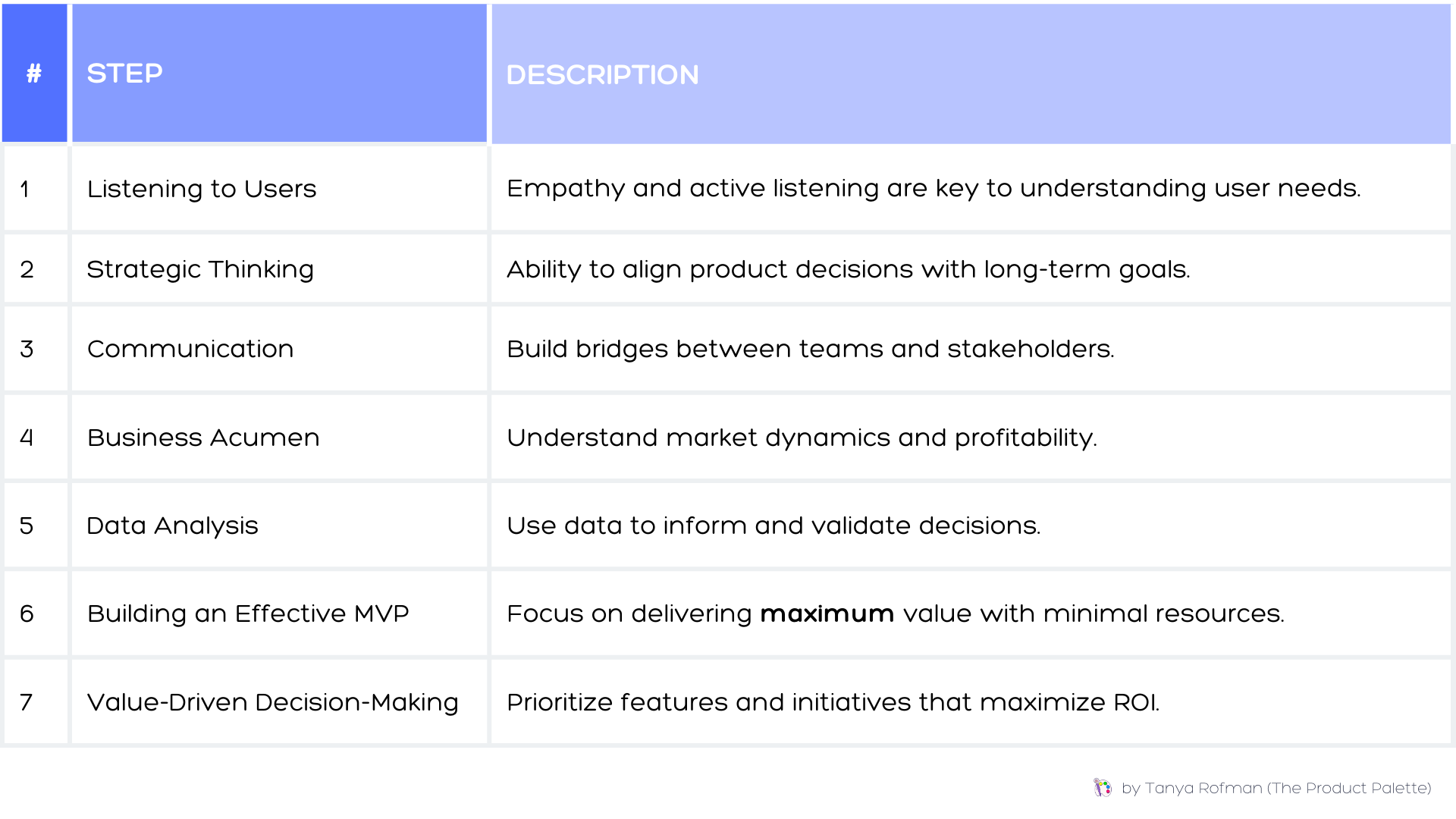
2. Seven Pillars of a Great Product Manager
To excel in these stages, a product manager must embody these qualities.
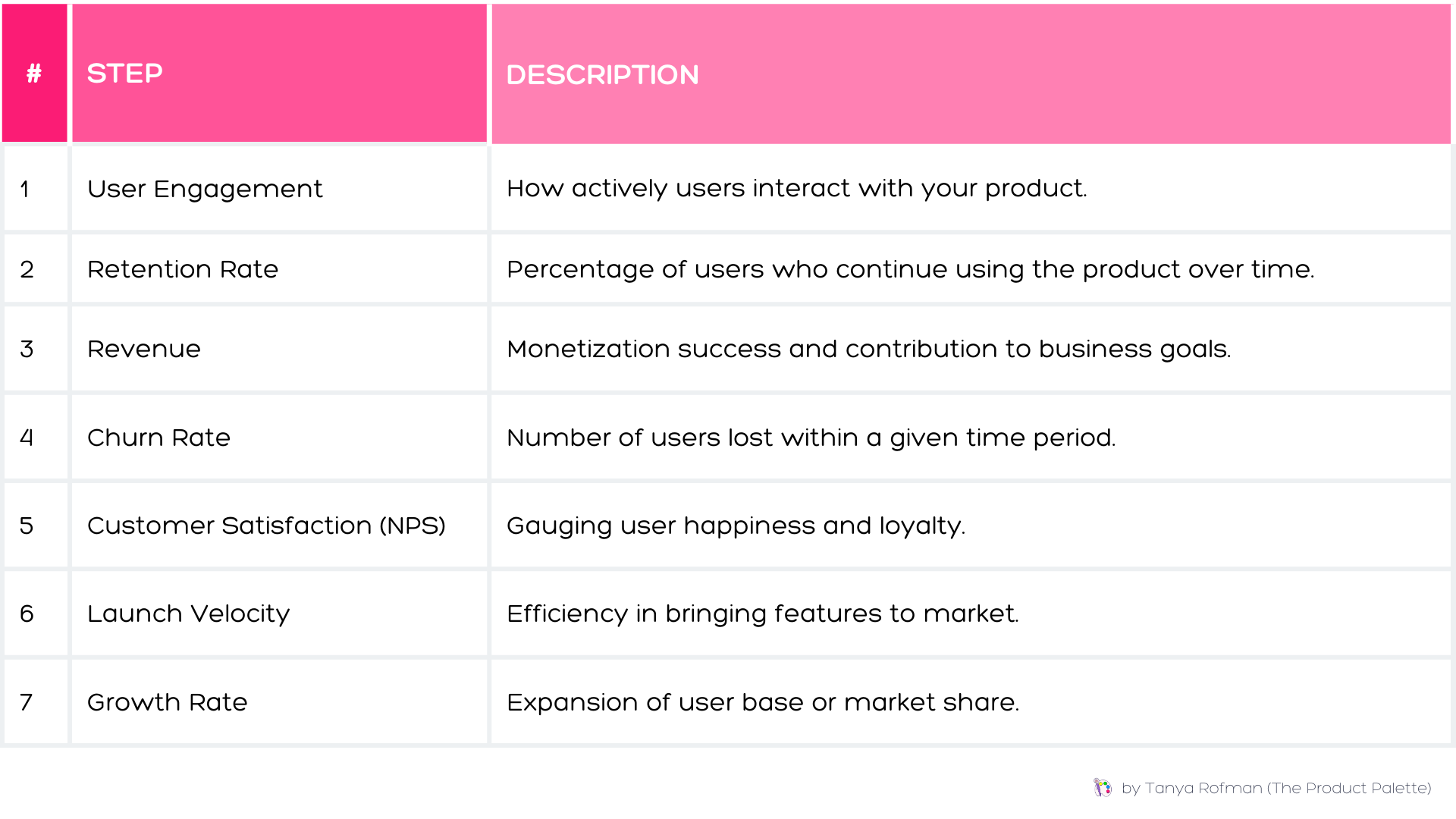
3. Seven Metrics of Success
Tracking these KPIs ensures you’re measuring what matters.
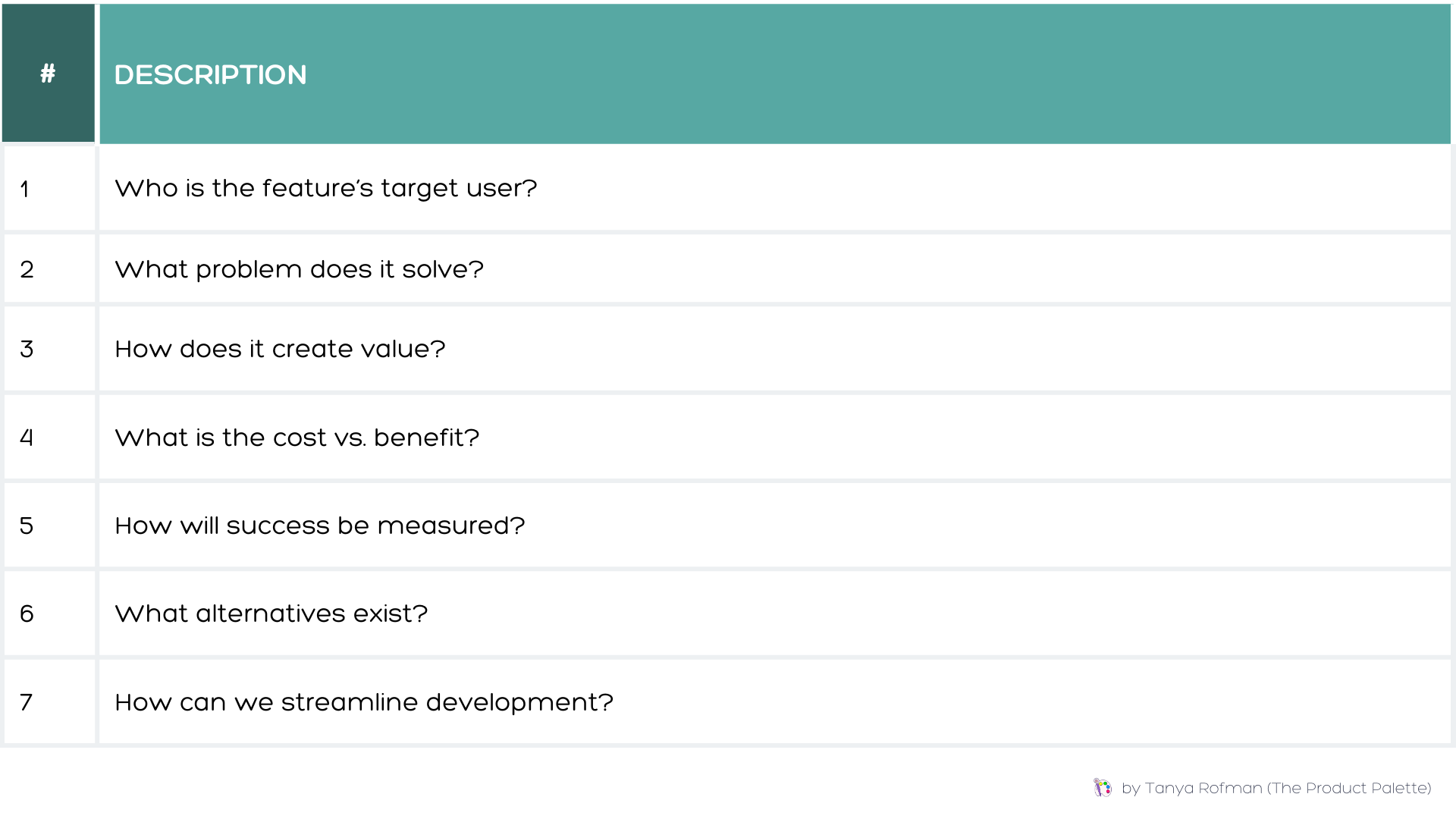
4. Seven Key Questions Before Building a New Feature
This question framework ensures efficient and meaningful feature development.
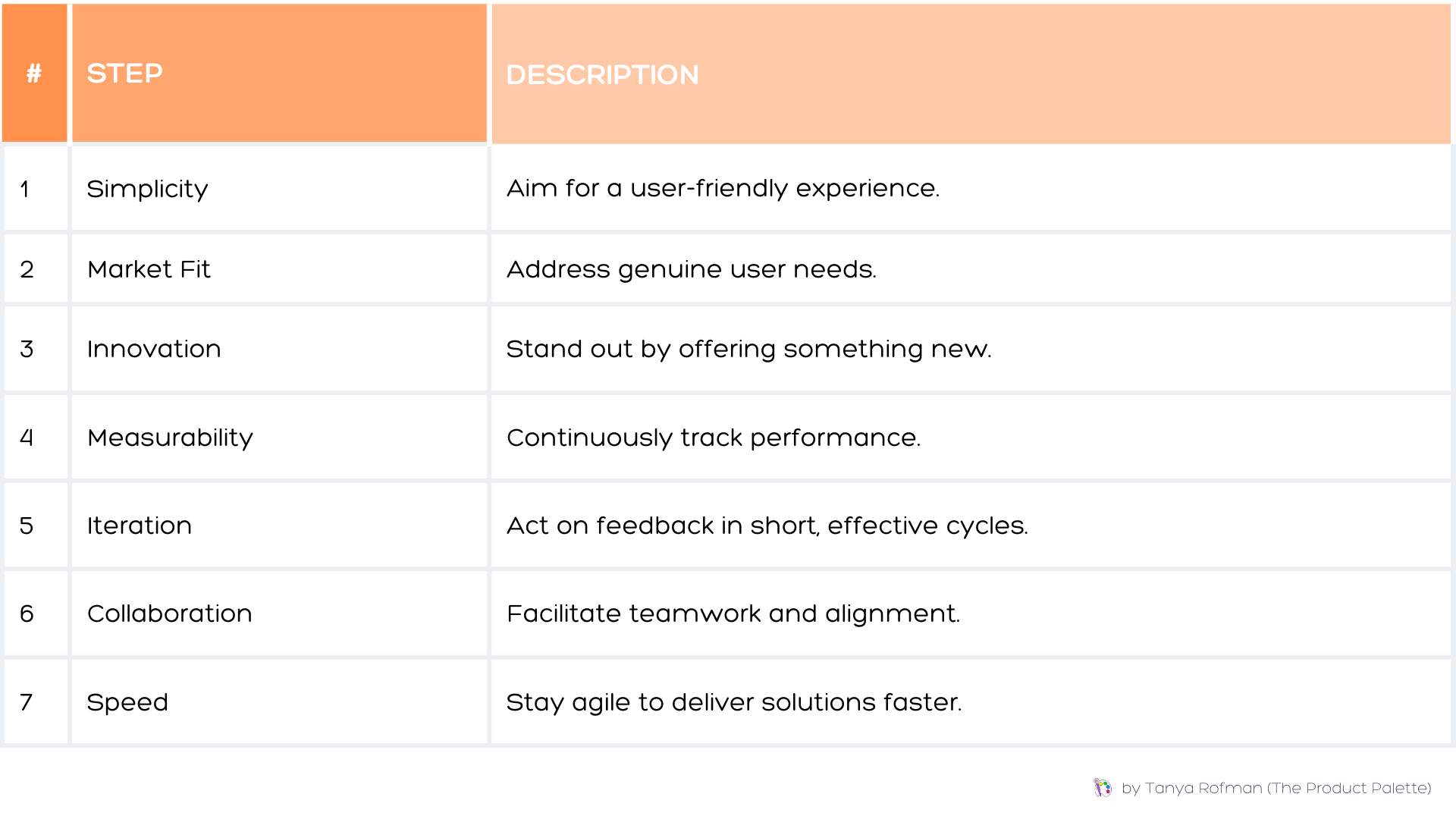
5. Seven Principles of a Winning Product
Use these principles to guide decision-making.
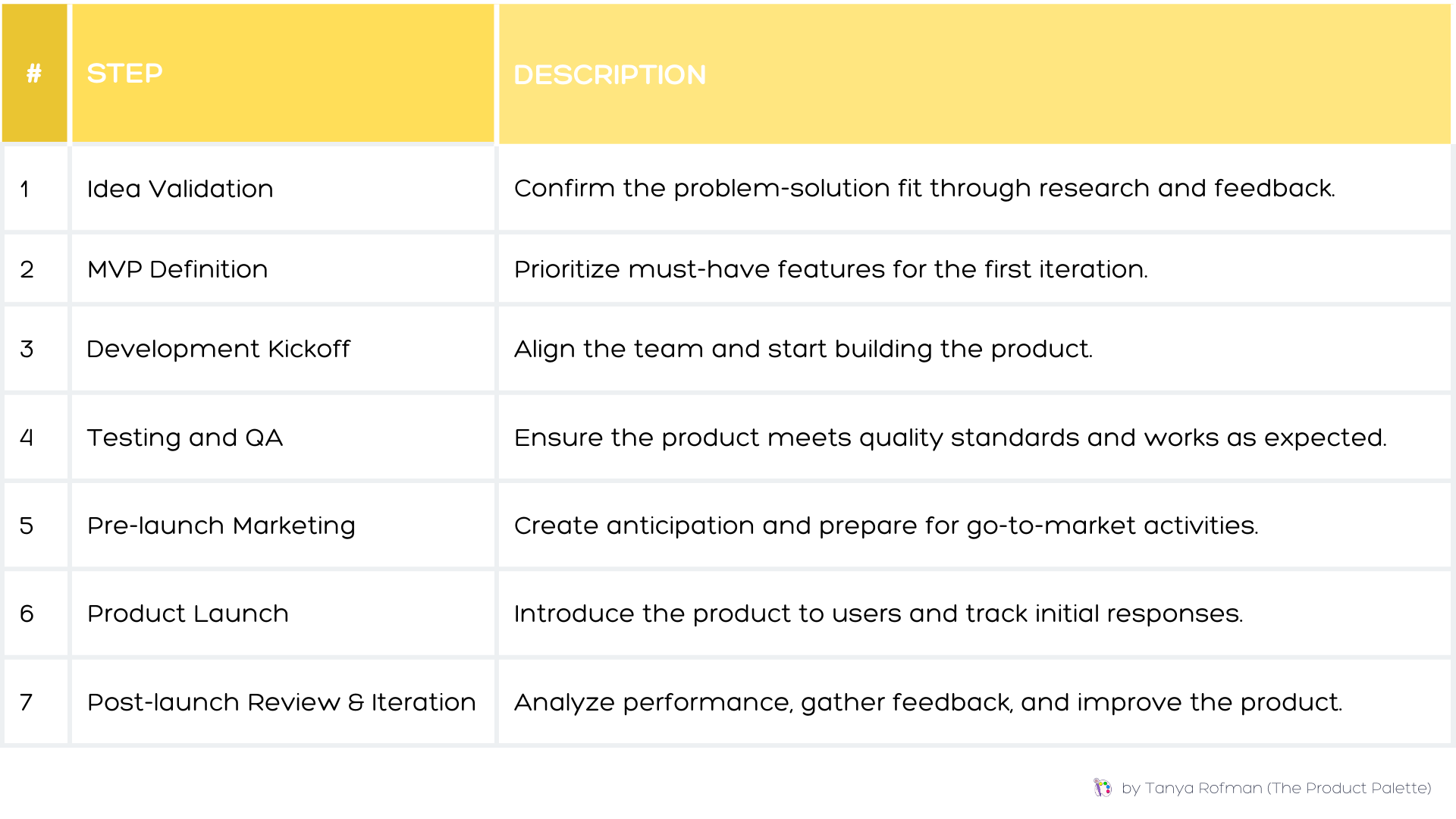
6. Seven Milestones in a Product Roadmap
Divide the product lifecycle into these checkpoints for clarity:
In the following chapters, I'll dive deep into each one separately.
What is Miller's Law, and is the 7±2 rule actually true?
Before the lists, the science. In 1956 psychologist George Miller published The Magical Number Seven, Plus or Minus Two, observing that people hold roughly seven chunks of information in working memory. Designers turned it into a rule; the truth is messier and more useful.
Later research, notably Nelson Cowan's, puts the real limit closer to four chunks, and Miller himself admitted the seven was half rhetorical. So the number is folklore. The mechanism underneath it, chunking, is the part that never stopped being true: people remember grouped, meaningful units far better than long undifferentiated lists. A phone number reads as three chunks, not ten digits. That's chunking doing its quiet work.

Does your navigation menu really need only seven items?
No, and this is the most common misreading of Miller's Law. Menus are recognition, not recall: users scan what's in front of them instead of memorizing it. Amazon's navigation carries dozens of links and works fine. Apply the limit where people actually hold things in their head: steps in a flow, options in a pitch, tiers on a pricing page, themes in a roadmap. That's exactly why my seven lists below work, each one is a chunked structure a team can actually keep in mind.
Seven: A Universal Symbol of Luck and Harmony
Now for the fun part - exploring the cultural and historical richness of the number seven and discovering something new 💫
- Western Culture -seven holds special significance due to its ties to mythology and religion. For example:
- In Judaism, there are seven days in a week, with Shabbat as the holy day 🕎
- The Bible frequently references the number seven, such as in the seven days of creation.
- In Christianity, seven is associated with the seven sacraments and the seven deadly sins.
- Eastern Culture:
- In Japan, seven is seen as especially lucky and is celebrated during events like the children’s festival Shichi-Go-San (meaning 7-5-3).
- In China, the number seven symbolizes emotions and harmony, and its sound is similar to words for “life” or “growth,” giving it positive connotations.
- Mythology and Literature:
- In Ancient Greece, seven was considered a perfect number (e.g., the Seven Wonders of the World) 🗻
- In Babylonian culture, seven represented completeness and harmony, reflected in symbols like the seven known celestial bodies of their time.
- Luck and Fortune:
Seven is often linked to good fortune, such as in casinos, where 777 is considered a winning combination 🎰
What do you think about using numbers for frameworks?
How do you approach your day-to-day as a PM? Drop a message - I'm always curious to connect and learn from others.
And it got this far... Let's connect and explore how I can add some colors and insights to your journey.
- 🌐 Explore my Website
- 💼 Connect on LinkedIn
- 📅 Book a consultation