Hello coffee lovers! ☕
A small new thing this edition: I've added a Hebrew version of this issue, tap the link to read it in Hebrew.
April in Tel Aviv is doing what it always does. The light stays longer. The evenings open up. I biked to the sea twice this week and sat at the same cafe both times, with the same book, and somehow it felt new on Tuesday and different on Thursday.
March was a month I'm still processing. This one feels like waking up slowly.
I also started something I mentioned last edition. The new contract is real, the direction is new, and I'm about four weeks into learning a domain I didn't know a month ago. The strange feeling of being a beginner again. Rough, also wonderful.
L.M. Montgomery wrote something that's been following me around this month:
"Nothing is ever really lost to us as long as we remember it."
So here I am. Coffee in hand. Back at the kitchen table.
Here's what's brewing on this month's menu:
- Travel - Over-tourism finally hits the wall 🧳
- Science - The psychedelic renaissance, quietly arriving 🍄
- Culture - The video essay era: long is the new short 🎥
- Tech - Beginner's mind at 41 💡
- Business - Second acts, and the companies built on them 🔁
- Food & Drink - The Cocktail of the Month 🥂
- Word Bites - Apricity 📖
- April in History 🌍
Over-Tourism Hits the Wall 🧳
6,000 people an hour. 🤯
That's how many tourists cross the Rialto Bridge in Venice on a peak summer day. The city has 49,000 permanent residents. Venice receives more than 25 million visitors a year.
You don't need a chart to understand what that does to a place.
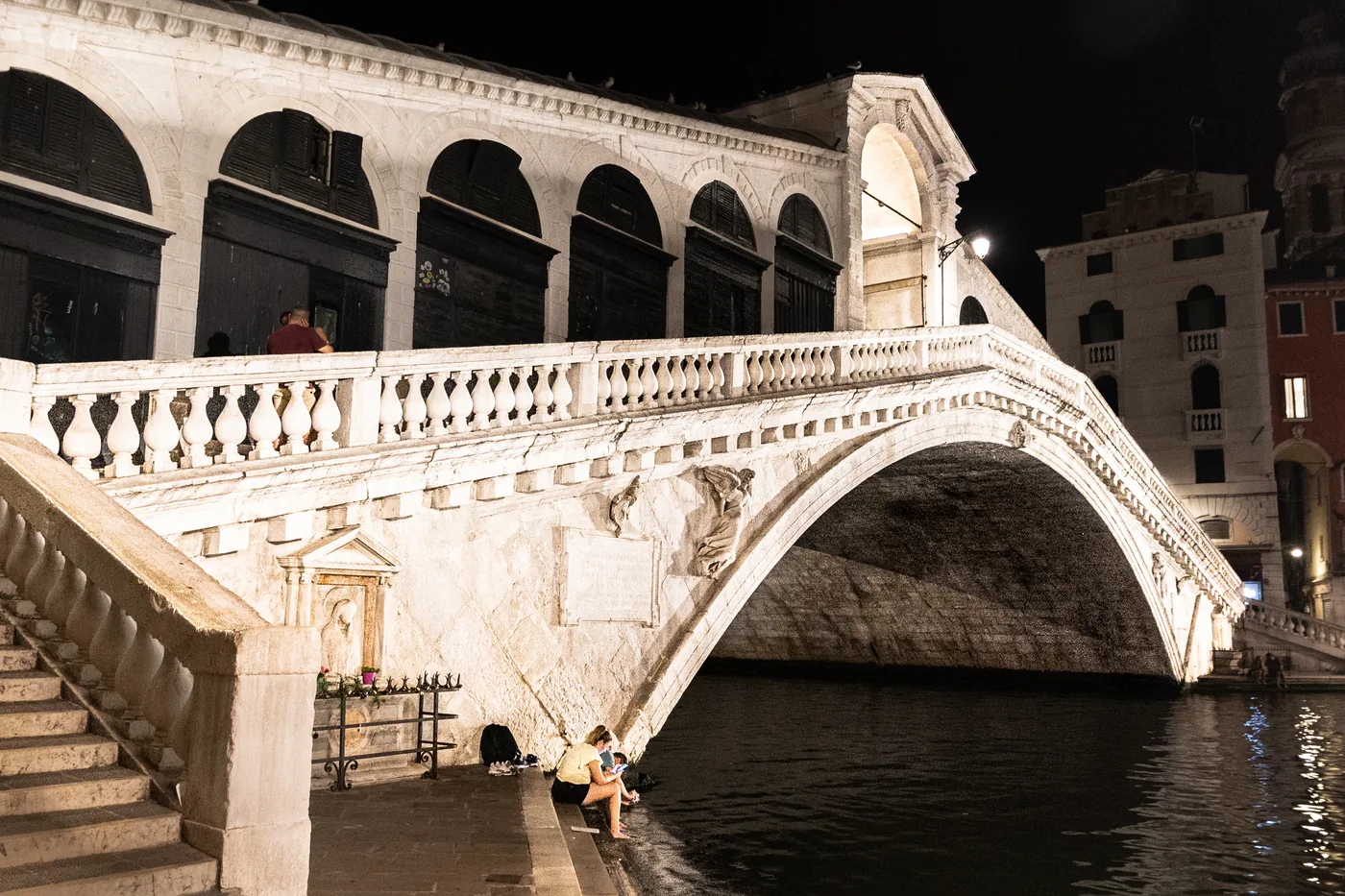
This month, a few things tipped. Barcelona announced it will phase out all short-term tourist rentals by 2028. Amsterdam is building a ban on new hotel construction into its urban plan. Venice began charging day-trippers a €5 entry fee, then raised it, then made it dynamic based on the season. The Balearic Islands are openly saying what locals have been saying for a decade: we cannot sustain this.
The backlash is not new. The scale of the backlash is.
A short, sharp piece of journalism on what's actually happening, worth a few minutes of your day:
For twenty years the travel industry ran on one assumption. More is more. More flights, more beds, more Instagram posts, more "best places to visit in 2025" lists. Tourism became a growth metric, the way every other thing became a growth metric. Nobody asked whether the place being visited could actually hold the weight of being visited at that volume.
Now the places are answering.
And something quieter is shifting underneath. I notice it in my own travel. The destinations I want to go to now are not the ones with the best algorithms. They are the ones a friend mentions in passing. A town I read about once in a novel. The list I'd actually travel from is short and private, and it has almost no overlap with TripAdvisor's. Honestly, it has been a while since I even opened TripAdvisor.
Maybe over-tourism is what finally kills the bucket list.
Maybe the next era of travel is smaller, slower, and a little harder to photograph.
The best places to go might be the ones no one is telling you to go to.
The Psychedelic Renaissance 🍄
In 2000, if you told a serious psychiatrist you were researching psilocybin as a treatment for depression, they would politely change the subject.
In 2026, Johns Hopkins has an entire Center for Psychedelic and Consciousness Research. NYU, Imperial College London, UCLA, all running clinical trials. The FDA granted MDMA-assisted therapy breakthrough designation. Oregon and Colorado have legal frameworks. Australia approved MDMA and psilocybin for specific conditions in 2023.
Something that was cultural taboo for fifty years is quietly becoming medicine.
For the long version of this story, this is a beautiful place to start:
The results are hard to dismiss. A 2022 Johns Hopkins study found that two doses of psilocybin, combined with therapy, produced sustained reductions in depression for patients where nothing else had worked. Other studies show strong signals for PTSD, end-of-life anxiety, addiction.
The science is genuinely exciting. Something more interesting is happening culturally though.
These compounds were not invented in labs. Psilocybin mushrooms have been used ritually in Mesoamerica for at least 3,000 years. Ayahuasca ceremonies are older than most modern religions. Indigenous communities knew, for centuries, what clinical psychiatry is now re-discovering with fMRI machines and double-blind trials.
We buried that knowledge. Called it primitive. And now we are carefully, respectfully, digging it back up, translating it into peer-reviewed English and putting it into treatment protocols.
It is one of the more humbling arcs in modern science.
And it raises the question nobody wants to ask: what else have we dismissed that might, in fifty years, turn out to be exactly right?
The renaissance is not just about mushrooms.
It is about what we choose to take seriously.
The Video Essay Era 🎥
The most-watched thing on YouTube right now is not a 30-second trick.
It is a man named Jacob Geller making a 45-minute meditation on architecture in horror video games. It is Patrick (H) Willems spending an hour unpacking why a single Ridley Scott shot works. It is Defunctland producing a two-hour documentary about a Disney theme park attraction that closed in 1994. Millions of views. Millions.
Yes, yes... it's not a 30-second thingy.
For a decade we were told attention spans were dying.
Short form, shorter form, six seconds or less. TikTok, Reels, Shorts. Every platform racing to the bottom of the duration chart.
And then, something weird happened.
Long came back.
If you've never gone down this rabbit hole, here is the genre at its best:
Not the long of cable television. Not the long of podcasts. A new form. Personal, essayistic, obsessive, deeply researched. A single creator, a specific question, forty-five minutes, no ad breaks, just the voice walking you through an idea until it lands somewhere neither of you expected.
The video essay is the literary essay of our decade. Montaigne would have made them.
What's interesting to me is who is watching. Gen Z, the generation we were told had eight-second attention spans, is driving this. They put on a 90-minute essay about the history of the mall and listen to it while they cook. They watch three-hour video-game analyses like my parents watched documentaries on television.
Turns out attention was never the problem.
The problem was that nobody was making anything worth paying attention to.
When the thing is good, the audience finds the time. This was always true. It was just buried under a decade of people optimizing for the wrong metric.
In product, in design, in writing, in newsletters (hi): good, slow, and strange is winning again.
Quietly, but clearly.
Beginner's Mind at 41 💡
A confession.
I am, this month, slower at my job than I have been in years.
Not at product. At the specific domain of the client I just signed with. I know the craft. I don't know the language yet. I don't know the history. I'm sitting in calls hearing acronyms I have to write down and Google afterwards. I'm reading papers slowly, three times. I'm asking questions that, to the people in the room, have obvious answers.
It is, genuinely, wonderful.
There is a Zen concept called shoshin. Beginner's mind. The idea that an expert's mind is full, and a beginner's mind is open, and the open one sees more.
A short reflection that gets it right:
Beginner's mind is only really beginner's mind when you are actually a beginner. And that is almost always uncomfortable.
Awww and how do we love uncomfortable... 😬
One of the quiet costs of staying in one domain is that you stop being bad at things. Which sounds like a win. Except being bad at things is the mechanism by which you learn, notice, get surprised, get humbled, get alive again.
Every few years, if you can, pick something you know nothing about. Not as a side hobby. As something with stakes, where you will be visibly not-ready for a while.
It is not comfortable. It is the opposite of comfortable.
But the sharpness it returns to you, the sheer looking at things, is worth it.
April is a good month for it.
And let me know what you decided to try out.
Second Acts 🔁
Some companies everyone thinks of as iconic started as something completely different:
- Nintendo spent 80 years making playing cards and, briefly, running love hotels, before it ever made a video game.
- Samsung sold dried fish and groceries in the 1930s.
- Nokia started as a paper mill. Then rubber boots. Then tires. Then, eventually, phones.
- Shell was originally an actual shell company, importing decorative seashells from the Far East.
- Berkshire Hathaway was a failing textile manufacturer when Warren Buffett bought it.
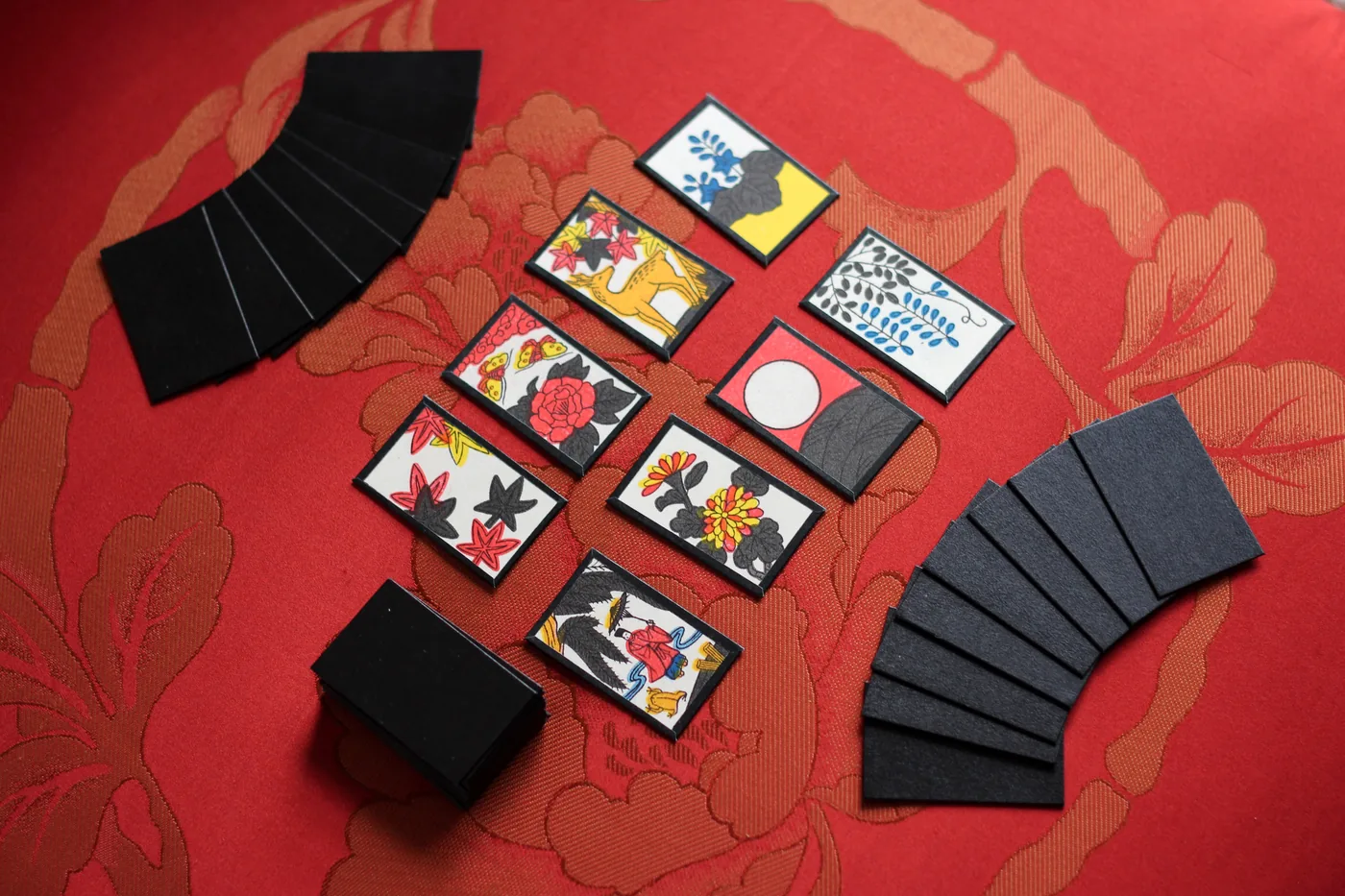
Every one of these is a Second Act. Sometimes a fifth or sixth.
For the deeper version of the Nintendo story:
Our culture has a strange relationship with reinvention. We admire the origin story (garage, dorm room, the moment of vision) and we are suspicious of the pivot. A company that changes direction is a company that "didn't know what it was." A person who changes careers is a person who "couldn't figure it out."
That is, I think, exactly backwards.
The companies that last are the ones that changed. Nokia became a phone company because the paper mill was dying. Samsung became an electronics giant because dried fish stopped paying the bills. Survival, in any long enough timeline, is reinvention.
The same is true of people.
Nobody ends up doing exactly what their 22-year-old self planned. And anyone pretending they did is lying or has stopped paying attention to themselves.
The second act is not a fallback. It is the main work of a long life.
The Cocktail of the Month 🥂
A small spring classic, for when your kitchen deserves a proper drink on a Friday evening.
The Bee's Knees is a Prohibition-era cocktail, mostly forgotten for fifty years, recently crawling back onto craft menus in Tel Aviv, Brooklyn, and London. Gin, lemon, honey syrup. Shaken hard, strained, served up. That's it.
It tastes like citrus and warmth and a balcony in late April.
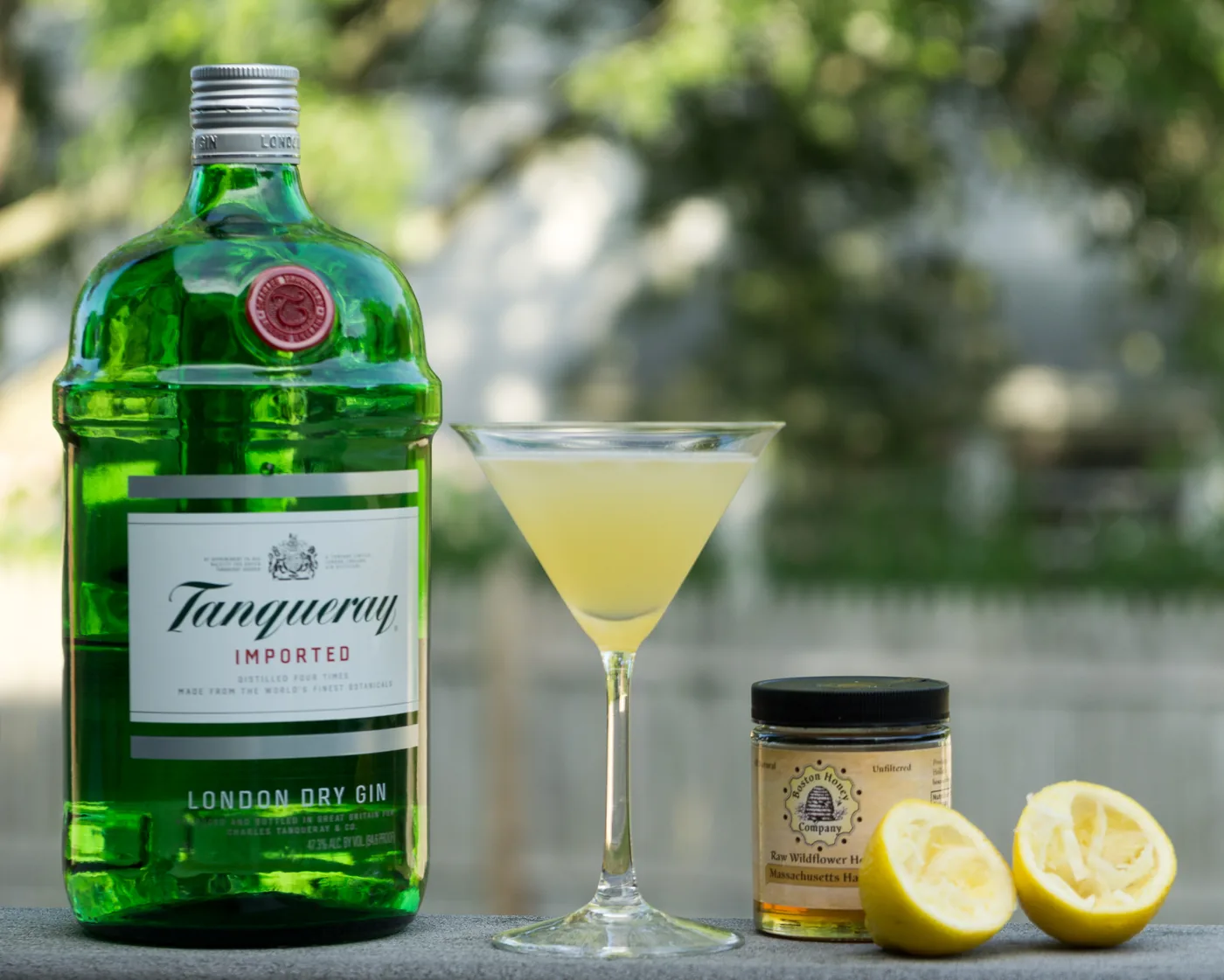
Why it fits the month: it has no pretense. It is not a Negroni (which is trying), not an Old Fashioned (which is posturing), not a Spritz (which is performing). It is a drink for a quiet evening with one person, or one book, or one long conversation that started on the balcony and moved inside when the air got cool.
If you make it, use local honey. The difference is real.
The classic recipe in 90 seconds:
Word Bites! 📚✨
Apricity (English, archaic)
The warmth of the sun in winter. The specific feeling of stepping outside on a cold day and having the light, briefly, hold you.
The word fell out of use in the 17th century. Which is a small tragedy, because the feeling did not fall out of use. Every Tel Aviv winter, on the days the sea wind relents and the sun finds your face at the bakery window, that is apricity.
April in Tel Aviv is, in its own way, apricity in reverse. The first heat in a month that still remembers the cold.
April in History 🌍
- April 4, 1968 , MLK is assassinated in Memphis ✊ The night before, he delivers the "I've Been to the Mountaintop" speech. He is 39 years old.
- April 12, 1961 , Gagarin becomes the first human in space 🚀 A 27-year-old farm boy from a village nobody had heard of orbits the Earth once, in 108 minutes, and lands in a field where a confused farmer offers him milk.
- April 15, 1912 , Titanic sinks 🚢 The "unsinkable" ship goes down in four hours. 1,500 people die. The disaster becomes the template for every story we tell about hubris.
- April 18, 1906 , The San Francisco earthquake 🌁 The city burns for three days. It rebuilds in three years. The fastest urban reinvention in American history.
- April 30, 1975 , Fall of Saigon 🇻🇳 The Vietnam War ends with helicopters lifting off a rooftop. The 20th century's most photographed exit.
Recommendations 🌟
What I'm watching / reading / listening to this month:
🎧 Listening - Easy April Mornings
A quiet playlist for the first coffee, window open, nothing urgent. Bossa nova, a little French, a little Sade. The sound of April before the day starts.
🎧 Audiobook - Ego Is the Enemy by Ryan Holiday
A re-listen for me this month, and the timing felt right. The argument is simple and brutal: ego is what stops you starting, what stops you learning, and what eventually stops you lasting. Holiday's narration is calm, unsentimental, and exactly what April wanted from me.
📺 Watching - Rooster (HBO)
Steve Carell as a best-selling author who shows up at his daughter's New England college and slowly falls apart and back together again. Created by Bill Lawrence (Ted Lasso, Shrinking), so you know the texture: warm, a little awkward, quietly moving. A second-act show about a second-act man. Felt like the right April watch.
Wrap-Up
That's all for this month.
April is a soft one. The first month of the year where I feel my shoulders drop. The air helps. The sea helps. Starting something new helps, even when it's hard, maybe because it's hard.
Whatever you're starting, restarting, returning to, remembering , I hope April is generous with you.
I'm also here:
You made it all the way here… thank you for sharing this coffee with me ☕❤️.
Ciao!
- Tanya
Liked this edition? Get the next one in your inbox, once a month.