Hello coffee lovers! ☕
Listen to this edition. In my voice.
August was hot. The brain-melting kind, where half the days I was just trying to keep up, drinking tons of water and coffee, and sometimes even that didn't help. So instead of fighting it, I paused. I froze most of my projects and went back over everything: what I'm doing right now, the clients I'm helping, what I want to do, who I want to help. A full refocus on my business. Less doing, more deciding.
And then the best thing happened. A relative of mine got married, one of the closest I have, and the wedding opened a path to reconnect. We hadn't really been in touch for a long time, there was always something, COVID, one war, then another one. This month we finally made up for it. Karaoke one night, a restaurant, a bar on another. My closest family, back in my life. Nothing better than that!! 🫂
I also came back to career mentorship and coaching. As a career mentor and advisor, I help people gain confidence, find the words to tell their story, and carry their skills from one job to the next: the CV, LinkedIn, networking, how to reach out and how to talk to people, and more. Whatever the field. And every time someone walks out of one of these conversations with a spark in their eyes and a plan in hand, I remember why I do this. So if you're feeling stuck, or just want your story to finally make sense, come talk to me 😉
Coffee in hand, as always, here's August.
Here's what's brewing on this month's menu:
- Art - The app that ended my doomscroll 🎨
- Culture - Il dolce far niente 🍋
- Travel - Five places nobody is fighting over 🧭
- Science - The solar thing I never actually understood ☀️
- AI - Should I go learn carpentry? ⚖️
- Word Bites - Duende 🔡
- August in History 🌍
- Recommendations 🍿
The App That Ended My Doomscroll 🎨
↑ topBy now you know how much I love art and culture (if you've been following me for a while). Wherever I am in the world, I end up in a museum or a gallery, it's the first thing I look up in a new city. (It's the same love that sent us down the who-owns-a-color rabbit hole back in #40). So when I discovered this app, about three years ago, my first thought was: why didn't I know about it before?
2,000 institutions. 80 countries. Seven million artifacts. No ads, no feed, no algorithm deciding what I need at 11pm.
Google Arts & Culture is not a must-have app.
Nobody needs it.
That is exactly why I love it ❤️
It started in 2011 as the Google Art Project with 17 museums. Fifteen years later it holds over 200,000 high-resolution artworks and more than 1,800 Street View walkthroughs of museums you will probably never stand inside.
Take the Duomo in Milan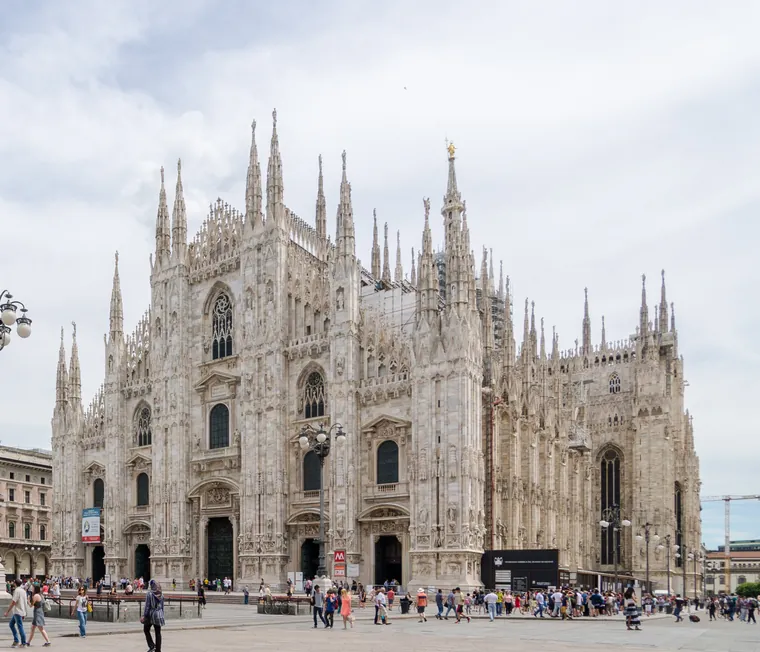 . Google brought their Art Camera, a robotic thing that focuses using laser and sonar, the way a bat does, and lifted it 30 meters into the air to capture more than 50 stained glass windows. Windows that have been hanging there since 1386 and that nobody has ever really seen up close. Not the people who built them. Not the visitors below. You can now zoom into a single pane of blue glass from your couch.
They call the project Milan Cathedral Remixed. 80 stories, 135 spires, a crypt, a sundial with zodiac signs built into the floor.
And then there is the Play tab, which is where I actually lose time.
Puzzle Party. Blob Opera. Art Selfie, which finds the painting that looks like you. A drawing party game. A gallery you decorate with daily deliveries of art.
Both Instagram and this app are infinite. Except here, the 11pm scroll ends in a museum, not in FOMO 🙂
Il Dolce Far Niente 🍋
↑ topI did it twice this month. Two full days, back to back, where I stopped everything.
Not "worked less." Stopped. I slept, I ate, I put on music that was actually good, and I did not open anything that required a decision. Well, maybe just what I want to eat 🙂
The Italians named this centuries ago. Il dolce far niente, literally "the sweet doing nothing." Not recovery. Not a productivity hack. Not the thing you earn after finishing the list. Just the pleasure of being idle, treated as its own reason.
Here is the part I did not know: it was a painting title long before it was a life philosophy.
Through the 1800s, half the Aesthetic movement used it. John William Waterhouse painted two, one in 1879 and one in 1880, the second hanging today in a museum in Kirkcaldy, Scotland. John Singer Sargent used the title. So did Godward, so did Holman Hunt. Always a woman, reclining, doing absolutely nothing, and the whole point was that there was no point. No story, no moral.
Art for its own sake, about idleness for its own sake.
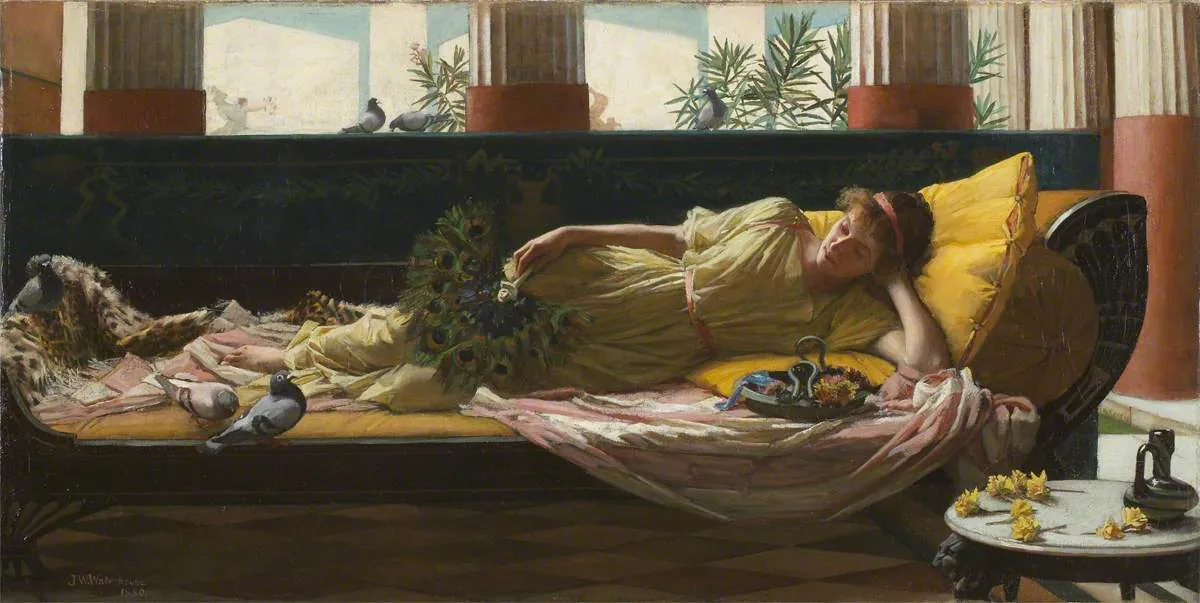
Most people meet the phrase through Julia Roberts in Eat Pray Love, where an Italian friend explains that Americans know entertainment but not pleasure. They know how to be distracted. They do not know how to do nothing.
I did nothing for two days and it took until the second afternoon before I stopped feeling like I was getting away with something.
That guilt is the thing worth noticing.
Five Places Nobody Is Fighting Over 🧭
↑ topAugust is the month where everybody is somewhere (at least it looks like it...), and all of them are standing in the same line.
Same airports. Same old towns. Same photo of the same square, taken over someone's shoulder.
I went down a rabbit hole this month and kept a list.
Five places I had never heard of, or had heard of and never really looked at.
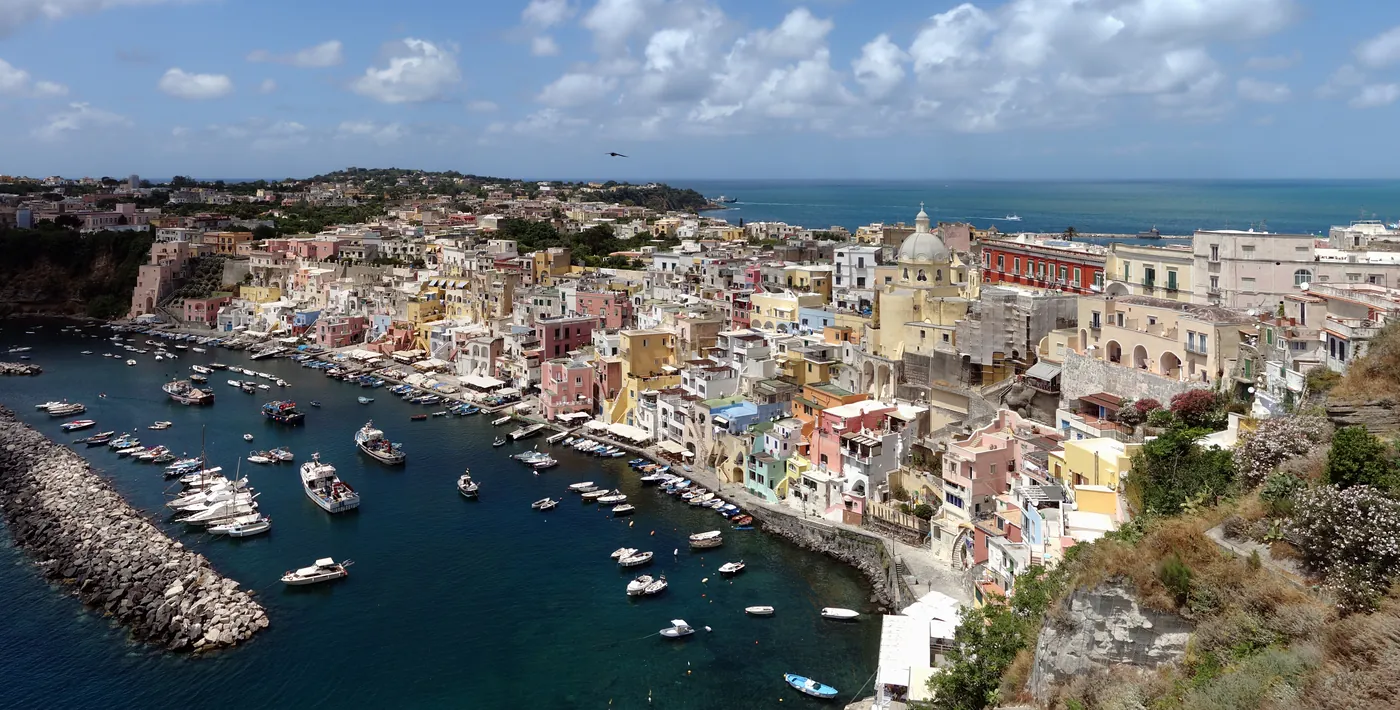
Procida, Italy 🇮🇹
Four square kilometers. The smallest island in the Bay of Naples, forty minutes by hydrofoil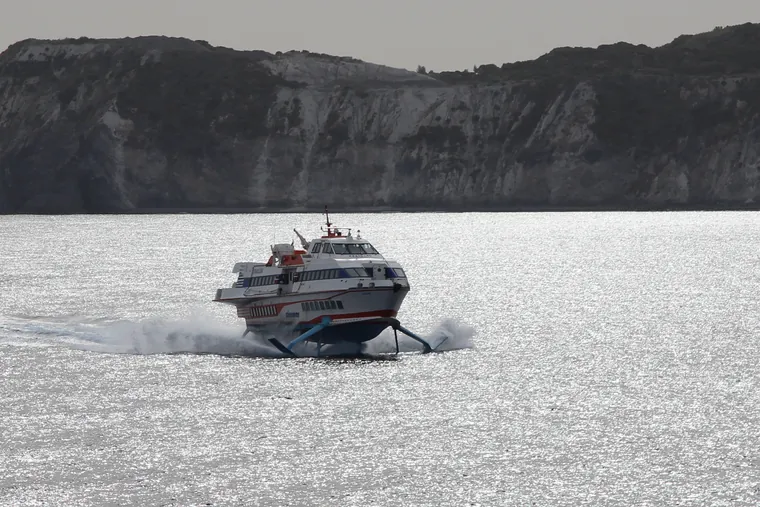 , sitting right next to Capri and Ischia while almost nobody gets off there. In 2022 it became the first island ever named Italian Capital of Culture, beating out Bari and L'Aquila with a project called la cultura non isola, culture does not isolate. About 10,000 people live there. Il Postino was filmed there.
Kuldīga, Latvia 🇱🇻
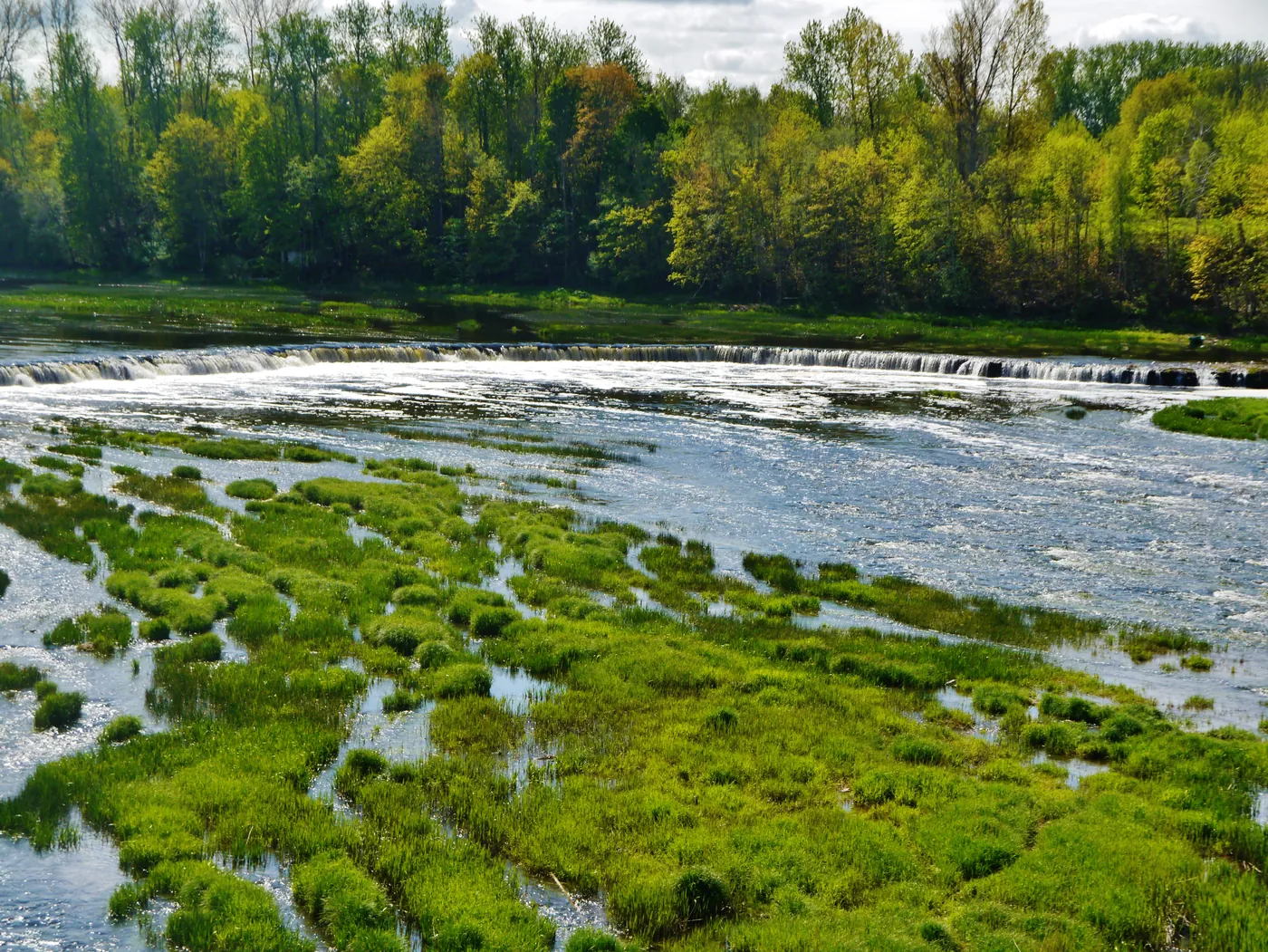
Europe's widest waterfall runs through the middle of town. It is 249 meters across and less than two meters tall, so it looks less like Niagara and more like the river tripping over a step. Three hundred years ago the Duke of Courland rigged baskets along it to catch salmon mid-jump, and Kuldīga became known as the town where you catch fish in the air. UNESCO added the old town in 2023.
Ushguli, Georgia 🇬🇪
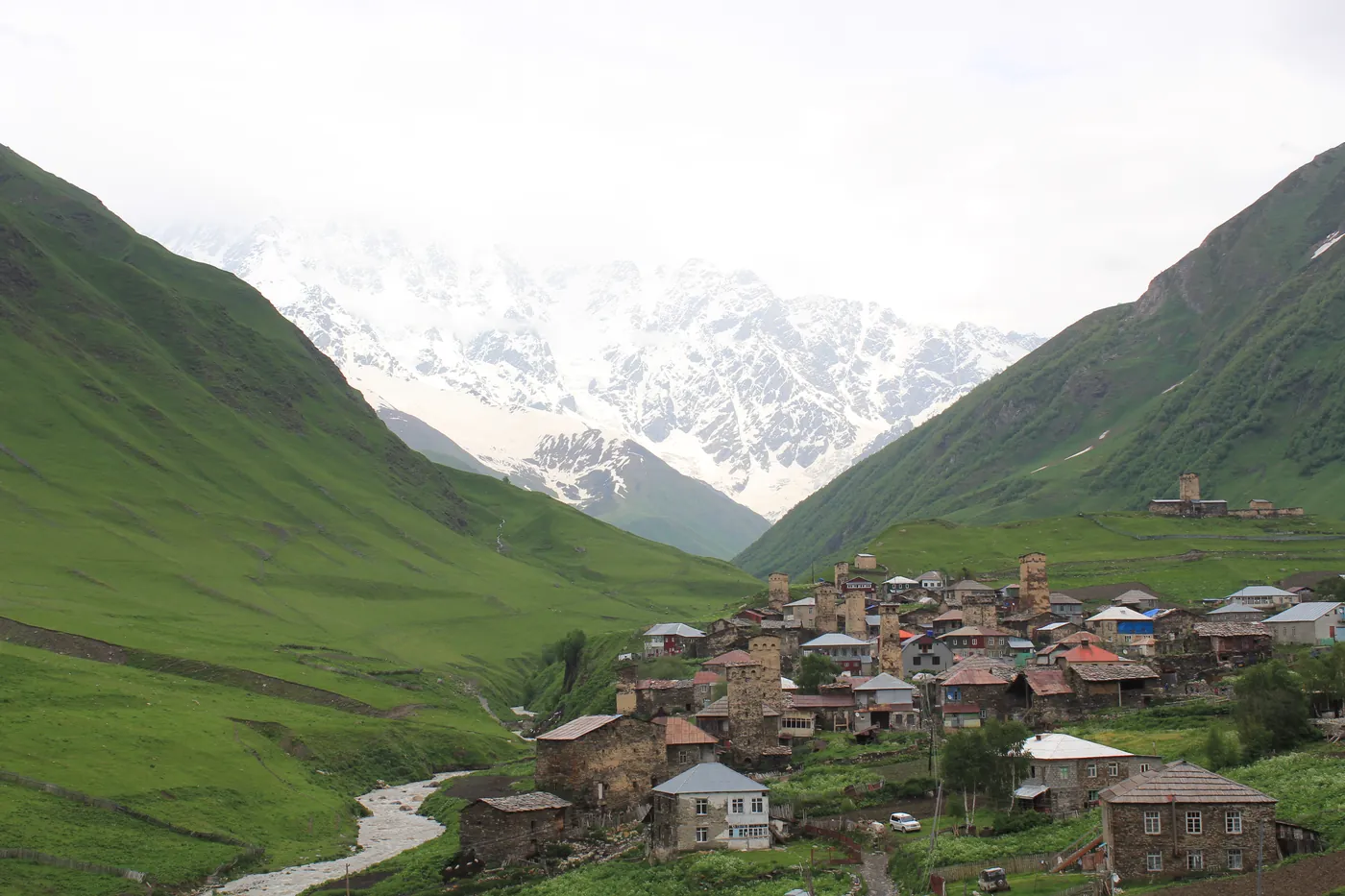
2,100 meters up in the Caucasus, one of the highest continuously inhabited settlements in Europe. More than 200 stone defensive towers, most of them built between the 9th and 12th centuries, still standing because the road in was so bad that nothing modern ever arrived. Mount Shkhara sits behind it at 5,201 meters. People still live there. Not as a museum, as a village.
Lençóis Maranhenses, Brazil 🇧🇷
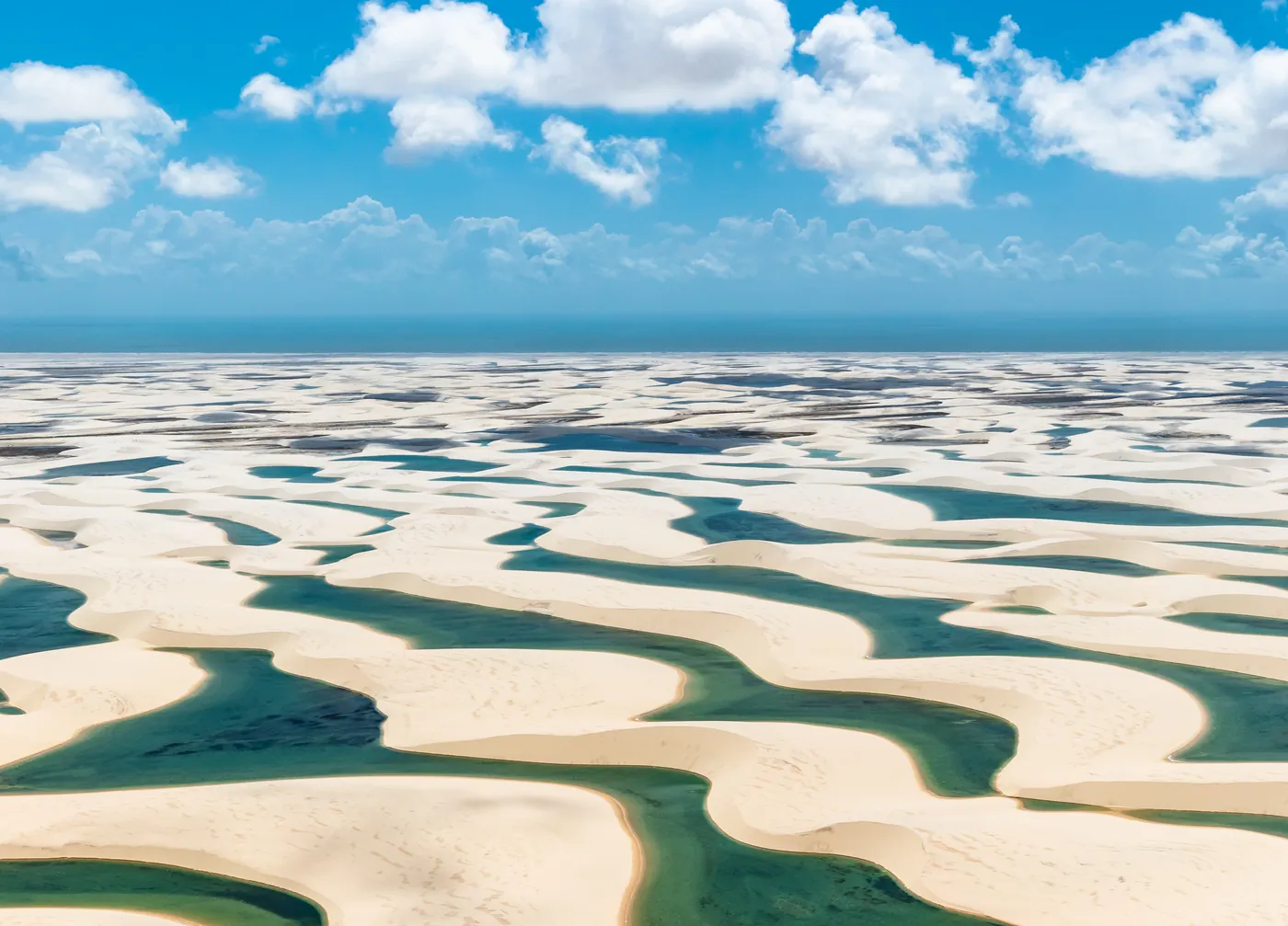
A field of white sand dunes the size of a small country that fills with rainwater every year and turns into more than 36,000 lagoons. No river feeds them. No river drains them. They appear between January and June and then evaporate, and because the dunes move, they come back the next year in different places. UNESCO listed it in 2024.
Setenil de las Bodegas, Spain 🇪🇸
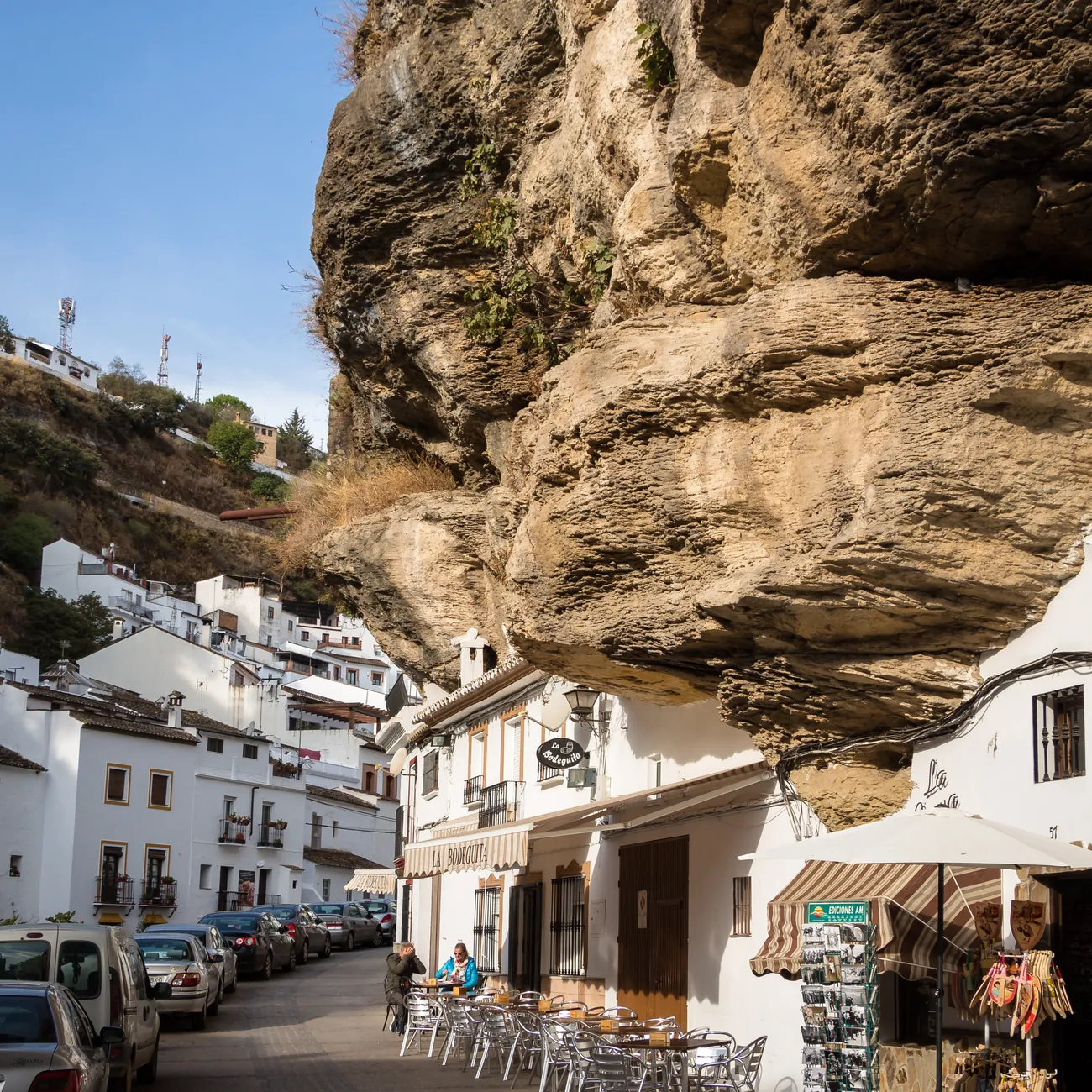
A white Andalusian town of about 3,000 people that did not build next to the rock. It built into it. The houses line the gorge of the Río Trejo, tucked under massive stone overhangs, so on some streets the rock is the roof. One side is called Cuevas del Sol, the sun caves, the other Cuevas de la Sombra, the shade caves, and in August the whole town knows which side to sit on. The "Bodegas" in the name is a leftover from the vineyards, wiped out by a plague in the 1860s. The rock never got the memo. It keeps the houses cool all summer.
Four of the five are places you have to want to reach. That is the whole filter.
Also worth knowing: Lençóis Maranhenses has its own story on Google Arts & Culture.
The Solar Thing I Never Actually Understood ☀️
↑ topI have been hearing about solar for years. I knew roughly what it was, but I never actually dug into it and fully understood what it is about.
Panels, good. Fossil fuels, bad. Somewhere in there, numbers with a lot of zeros. I agreed with people in conversations the way you do when you have decided it is too late to ask.
So this month I finally asked.
A watt is a rate, not an amount.
It measures how fast something uses power, not how much it has used.
| What | Roughly |
|---|---|
| Phone charger | 20 watts |
| Electric kettle | 2,000 watts |
| Gigawatt | 1,000,000,000 watts |
| Terawatt | 1,000,000,000,000 watts |
A terawatt is roughly what a large chunk of a continent runs on.
The part that confused me most: when they say the world has "3 terawatts of solar," they mean installed capacity. That is the ceiling, what all those panels could produce together at noon on a perfect day. Once you understand that one distinction, the whole subject stops being fog.
Now the number. The world crossed 100 gigawatts in 2012. It hit one terawatt in 2022, enough to cover peak US demand on its own. The second took under three years. The third took less than two, and landed quietly earlier this year.
Ten years to the first trillion. Nineteen months for the most recent one.
Forecasters expect more than nine terawatts by 2036, and two studies pulling together five decades of research put solar at around 61% of the world's electricity by 2050.
The part I did not expect: this is no longer only a rich-country story.
Pakistan, Nigeria, and the Philippines have all seen rooftop solar take off, and batteries follow close behind, because a panel is useless at night unless something holds the afternoon for you. Lithium-ion batteries cost about $78 per kilowatt-hour today. In 1991 they were around $9,200.
Bloomberg called it the milestone nobody noticed. Analysts still argue about the exact date the third terawatt was crossed, which is part of why nobody noticed.
Which is the strange thing about real change. It is not loud. It is a graph that quietly stops looking like the past.
Sources: Good Good Good, Yale E360
And one more thing, at the other end of the scale.
On August 20 the Guardian announced its Invertebrate of the Year (animals without a backbone, like insects, octopuses and snails).
It went to a sea slug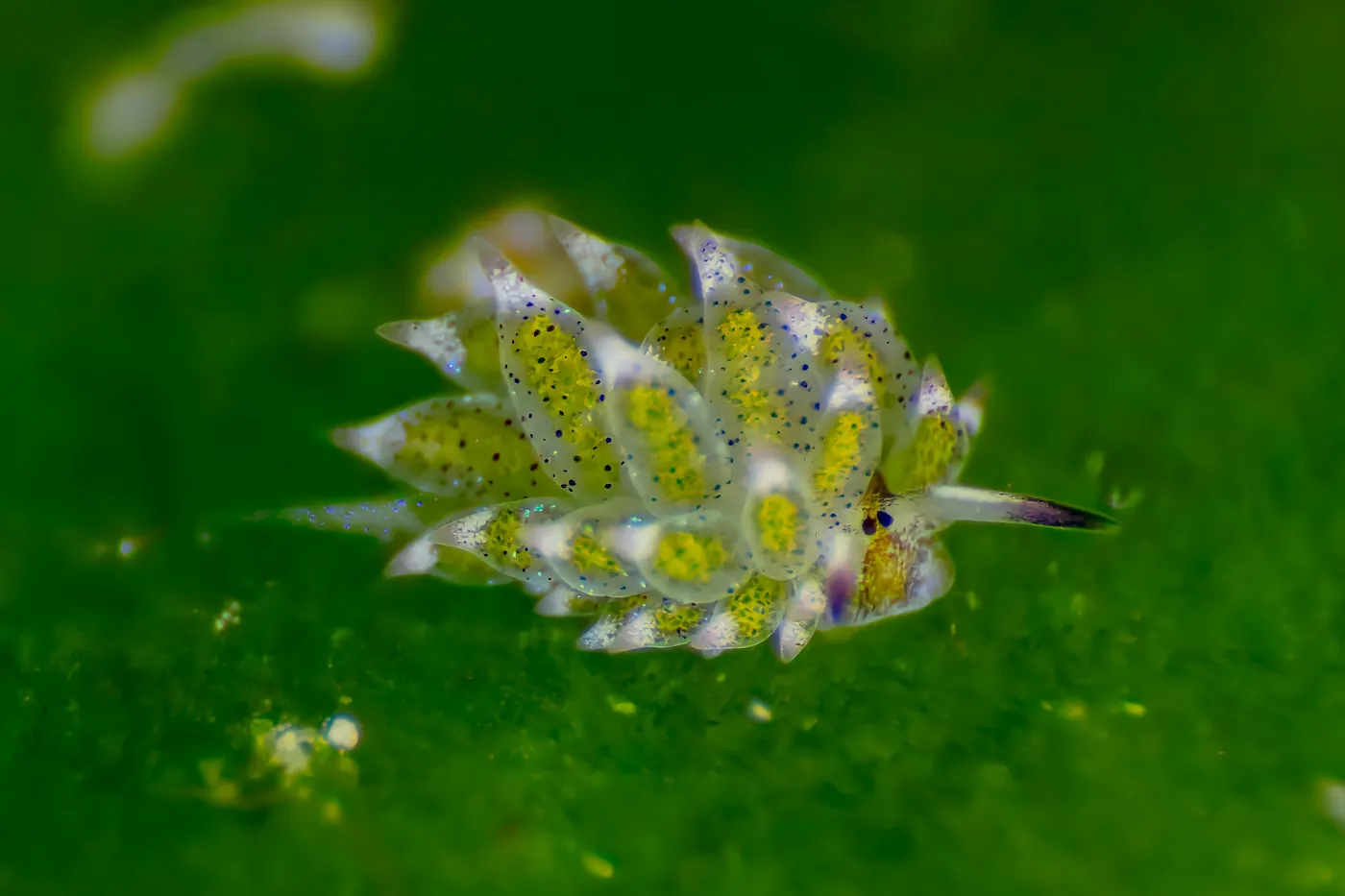 the size of a grain of rice.
The leaf sheep, Costasiella kuroshimae, lives in warm water around Japan, Indonesia, and the Philippines, and it is five millimetres of bright green with two little ears. It eats algae and does not finish the job. It keeps the chloroplasts, which stay alive inside its tissue and go on photosynthesising. The slug runs partly on sunlight.
The word for this is kleptoplasty, from the Greek for thief.
Chris Packham announced the win by saying it builds its own solar panels.
Five millimetres. Three trillion watts. Same idea.
Should I Go Learn Carpentry? ⚖️
↑ topI have been avoiding writing about AI. The internet is already drowning in it, and I did not want to add another take.
Then I read this one, and it is not really about AI. It is about who pays the price.
A graphic designer at a Chinese tech company was fired after his work was handed to Midjourney and Pixso AI. He sued. The Guangzhou Intermediate People's Court ruled the dismissal illegal.
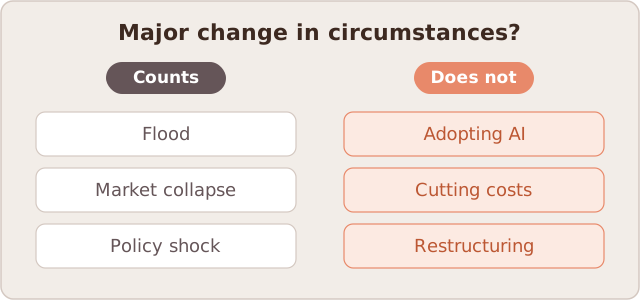
The reasoning is the interesting part. Under Chinese labour law, you can terminate a contract when there is a major change in objective circumstances. A factory floods. A market collapses. Things that happen to you.
The court said adopting AI is not that. It is a business decision. A choice the company made, on purpose, to save money.
This April, on the eve of International Workers' Day, a second court agreed. A fintech worker named Zhou had his job automated and was offered a transfer at 15,000 yuan a month instead of 25,000. He refused. He was fired. He won, twice, and the court wrote that the company was shifting the cost of its own transformation onto the employee.
There is a third case in Beijing. A map data collector. Same conclusion.
The part I keep turning over: China is spending roughly $295 billion on AI infrastructure, and its courts are the ones drawing the line.
So, should I go learn carpentry.
Maybe. But the question these rulings actually ask is a better one. Not whether the machine can do your job. Who carries the cost when it does.
Word Bites! 🔡
↑ topDuende 🇪🇸
Spanish, and almost untranslatable. Not talent. Not beauty.
Duende is what arrives when art stops being impressive and starts being dangerous. Lorca (Federico García Lorca, the Spanish poet who wrote a whole lecture chasing this word) said the muse dictates and the angel inspires, but duende has to be fought for.
You cannot practice your way into it. You can only leave room.
It's the difference between a perfect performance and one that leaves the room quiet afterward.
Duende joins the collection: all 26 Word Bites, in one place.
August in History 🌍
↑ top- August 10, 1793 - The Louvre opens to everyone 🏛️
The revolutionary government turned a royal palace into a public museum and hung 537 paintings in the Grande Galerie. Art that had lived in private bedrooms became something anyone could walk in and look at. - August 9, 1965 - Singapore becomes a country by accident 🇸🇬
Expelled from Malaysia after less than two years in the federation. Lee Kuan Yew announced it on television and cried on air. - August 21, 1911 - The Mona Lisa disappears 🖼️
A former Louvre handyman hid in a closet overnight and walked out with her under his smock. She came back two years later as the most famous painting on earth, which she had not been before. - August 1, 1981 - MTV launches 📺
The first video was "Video Killed the Radio Star." Almost nobody could see it, since the channel was carried in barely any homes. - August 6, 1991 - The web goes public 🌐
Tim Berners-Lee posted a short summary of a project called the World Wide Web to a newsgroup. The first website went live the same month.
Recommendations 🍿
↑ top📺 Series - I Will Find You (Netflix)
A father serving life for killing his son, who did not kill his son, gets a photo suggesting the boy is alive. Harlan Coben, so you already know it will not let you stop. Eight episodes. I finished it in half a day and I am not sorry.
📺 Series - Lucky (Apple TV)
Anya Taylor-Joy as a con artist on the run from the FBI and from the people she stole from, with Annette Bening as the crime boss and Timothy Olyphant phoning in from prison as her dad. Seven episodes, one a week, so this one you cannot binge. Probably good for me.
🎧 Listening - Theta waves for calm
Theta is a real brain rhythm, 4 to 8 Hz, the one that shows up in light sleep and deep meditation. Whether the music actually pushes your brain there is still debated, but it slows your breathing and gives your attention one thing to hold. Which may be the whole trick.
Wrap-Up ☕
↑ topThat's #42.
According to The Hitchhiker's Guide to the Galaxy, 42 is the answer to life, the universe and everything. My month went the other way: I learned that not everything needs an answer right now. I paused, I refocused, I got my closest family back around one table, and I did sweet nothing for a couple of days without apologizing for it.
If your August melted too, here's my prescription: one quiet place, one day of dolce far niente, and as many people as possible who you don't have to explain yourself to.
See you in September. Same table, fresh coffee.
I'm also here:
You made it all the way here... thank you for sharing this coffee with me ☕❤️
Ciao!
—Tanya
Liked this edition? Get the next one in your inbox, once a month.