Hello coffee lovers! ☕
Every year in Israel there's the same little game: where did the holidays land this time?
This year? All of them landed on September. Rosh Hashanah, Yom Kippur and Sukkot, one after the other, three weeks in a row.
And if you live here, you know exactly what that means. The whole country switches into one mode: "אחרי החגים". "After the holidays."
The meeting, the decision, the new routine, the thing we promised ourselves.
All of it waits for "after."
As this lands in your inbox, it's still Sukkot. Maybe you're abroad, maybe taking a break somewhere in Israel, maybe just out on a trip. Either way, "after" is almost here.
It's still hot here. But everywhere else, the trees already got the memo. So that's where this edition starts.
Here's what's brewing on this month's menu:
- Science - The colors were there all along 🍁
- History - The glue that failed its way to the top 🟨
- Culture - The companies that chose not to grow 🏯
- Math - Why so many numbers start with 1 🔢
- AI - The chatbot that made its creator nervous 💬
- Word Bites - Mono no aware 🔡
- September in History 🌍
- Recommendations 🍿
The Colors Were There All Along 🍁
↑ topI love color.
Art, paintings, that moment at sunset when the sky goes from orange to pink to purple in a few minutes.
So autumn, for me, is a bit like an exhibition nature puts up once a year.
And here's the part I never knew.
Leaves don't turn yellow in autumn. They were yellow the whole time.
Shocking, right?
Quick nerd moment 🤓
All summer, leaves are packed with chlorophyll, the green pigment that turns sunlight into food. There's so much of it that it covers everything else. Underneath, the yellows and oranges (carotenoids, the same family that makes carrots orange) are sitting there quietly, waiting.
When the days get shorter, the tree stops making chlorophyll and starts pulling nutrients back into its branches before winter. The green breaks down. The yellow finally shows.
The reds are different.
Those are anthocyanins (red and purple pigments, the same ones that color blueberries, red cabbage and red grapes), and the tree actually makes them fresh at the end of summer. Scientists still argue about why. Sunscreen for a leaf that's shutting down, a warning sign to insects, or both.
The best seasons need a very specific kind of weather. Bright, cool days. Chilly nights that don't freeze. Get that, and you get the kind of hillside that stops traffic.
Canada and New England get it most years, because North America simply has many more tree species than Europe to join the show. Japan has a word for going out to see it: 紅葉狩り, momijigari, literally "hunting red leaves."
In Israel it's still 30 degrees. So I'm watching from here 😂
The Glue That Failed Its Way to the Top 🟨
↑ topIn 1968, Spencer Silver, a chemist at 3M (Minnesota Mining and Manufacturing, the American company behind Scotch tape and thousands of other products. Three Ms. Now you get why it's called 3M? For me this was brand new 🤯), was trying to make a super-strong adhesive. Strong enough for building aircraft.
He got the opposite 🙃
A glue so weak it could hold two pieces of paper together and then let go without tearing either one. Tiny acrylic spheres that only touched the surface at a few points. Impressive chemistry. No obvious use.
So he spent years presenting it inside 3M. Seminar after seminar. Nobody bit.
In 1974, a 3M engineer named Art Fry sat in one of those seminars. Fry sang in his church choir, and he had a small, very specific problem: the paper bookmarks kept falling out of his songbook.
A bookmark that stays put and comes off clean.
That was it. Fry built the first real use for Silver's glue, and the two of them kept pushing it through the company.
The first test launch, in 1977, was called "Press 'n Peel."
It failed.
People didn't get it until they actually held one.
So 3M handed out free samples, and once people used them, they didn't stop.
The national launch came in 1980, under a new name: Post-it Notes.

What I love about this story is that the invention wasn't the glue. The glue existed for six years.
The invention was one person with a real, annoying, tiny problem who happened to walk into the right room.
Most of the craziest products were born exactly like that, from a real problem someone actually had. It's also what I've seen throughout my whole career in product management and development.
Every product workshop wall covered in yellow squares started with a choir songbook.
The Companies That Chose Not to Grow 🏯
↑ topMost of my working life has been in startups, where there's really one question. How fast?
How fast to grow. How fast to scale. How fast to add customers, revenue, people.
Japan has a different question.
How long?
There's a word for it: shinise (老舗), a business that has been running for at least 100 years.
As of 2020, Japan had more than 33,000 of them. Over 3,100 are older than 200 years. About 140 are older than 500. At least 19 say they've been around for more than 1,000.
Japan holds more than half of all the companies in the world that are over 200 years old. 🤯
The oldest on record is Kongō Gumi, a construction company founded in 578 AD (yes, you're reading this right) in Osaka. A carpenter was invited from Korea to build a Buddhist temple, and his family kept building temples for 40 generations. The family line ran it until 2006, when competition from concrete construction finally caught up and a larger group bought it. It still operates today, under the same name.
Then there's Nishiyama Onsen Keiunkan, a hot spring inn founded in 705 AD. And Nintendo, which started in 1889 making playing cards.
What do they have in common? Researchers keep finding the same short list:
- Stick to the core business
- Keep cash reserves
- Avoid debt
- Keep long relationships with customers and suppliers
Some even adopt a capable employee as the heir when there's no family successor.
None of this is exciting on a pitch deck. It limits growth on purpose.
But it survives earthquakes, wars, and every economic crisis of the last 1,400 years. Which is more than I can say for most of the pitch decks.
I love Japanese culture, and every time I dig into another small piece of it. And every time I find how much there is for us to learn from it. Not just to learn, but to actually put into practice.
Why So Many Numbers Start With 1 🔢
↑ topThis one goes out to my first decade after the army.
I studied economics and business administration, then spent my days analyzing the financial statements of publicly traded companies around the world. For a living. Yes, numbers used to be my whole world 🤓
Now... take any big, messy list of real-world numbers. Country populations. River lengths. Company revenues. Electricity bills. Now look only at the first digit of each number.
You'd expect every digit from 1 to 9 to show up about equally. Around 11% each.
It doesn't happen.
The digit 1 comes first about 30% of the time. The digit 9, less than 5%. Each digit is rarer than the one before it.
This is Benford's Law, and it was discovered in the most analog way possible.
In 1881, an astronomer named Simon Newcomb noticed that in the library's books of logarithm tables, the early pages (numbers starting with 1) were much more worn than the later ones. People simply looked up those numbers more.
In 1938, a physicist named Frank Benford tested the idea on more than 20,000 numbers from 20 different sources. Same pattern every time. His name stuck.
Why does it happen?
Roughly: anything that grows by percentages spends much longer in the 1s than in the 9s. Going from 100 to 200 means doubling. Going from 900 to 1,000 is just 11%.
Here's where it gets practical.
When people make up numbers, they spread the first digits too evenly. So forensic accountants run Benford checks on expense reports and tax data, and it's been accepted as evidence in US courts.
One caveat. It doesn't work on everything. Heights, IQ scores and prices like 9.99 don't follow it. The data has to span many orders of magnitude.
Want to see it happen in front of your eyes?
And if you want to go deeper, the Netflix docuseries Connected (2020) has a whole episode on it, simply called "Digits."
The Chatbot That Made Its Creator Nervous 💬
↑ topLong before ChatGPT, there was ELIZA.
Joseph Weizenbaum built it at MIT between 1964 and 1967.
It was a very simple program. It looked for keywords in what you typed and reflected them back as questions, in the style of a therapist.
You: "I'm worried about my mother."
ELIZA: "Tell me more about your family."
That's it. No understanding. No memory. Pattern matching and a script, deliberately built so it would never need to know anything about the real world.
And people fell in love with it ❤️
The story Weizenbaum told for the rest of his life: his own secretary, who had watched him build it and knew exactly what it was, asked him to leave the room so she could have a private conversation with it.
He was shaken. He later wrote: "I had not realized... that extremely short exposures to a relatively simple computer program could induce powerful delusional thinking in quite normal people."
That reaction now has a name. The ELIZA effect: our tendency to read understanding, intention, and even feelings into a machine that produces human-sounding words.
Weizenbaum spent the next decade warning about it, and in 1976 wrote a whole book, Computer Power and Human Reason, arguing that some decisions belong to people, not computers.
I spent part of my career in GenAI companies, and I think about ELIZA a lot. Today's models are far smarter than a program from the 60s. But the effect was never about the machine. It's about us.
We're wired to hear a person on the other side of a sentence. Worth remembering the next time a chatbot tells you it understands.
🎧 Listen: 99% Invisible, "The ELIZA Effect"
Word Bites 🔡
↑ topMono no aware 🇯🇵
Japanese, 物の哀れ, and one of those words that explains a whole culture.
Literally something like "the pathos of things." A gentle, bittersweet awareness that everything passes. Not sadness exactly. More like noticing that something is beautiful because it won't last. ❤️🩹
It's why Japan stops for a week to watch cherry blossoms that fall almost as soon as they open. And why people go out every autumn to hunt red leaves. If they stayed forever, nobody would come.
The phrase was made famous in the 18th century by the scholar Motoori Norinaga, who called it the heart of The Tale of Genji, the thousand-year-old story often called the world's first novel.
Which, now that I think about it, is what this whole edition is about. Leaves that let go, companies that last 1,000 years, and a September that's almost over 🍂
Mono no aware joins the collection: all 27 Word Bites, in one place.
September in History 🌍
↑ top- September 28, 1928 - Fleming comes back from vacation 🧫
Alexander Fleming found mold killing the bacteria in a dish he'd left out. It became penicillin. - September 9, 1947 - The first computer "bug" 🐛
Engineers working on the Harvard Mark II found a moth stuck in a relay and taped it into the logbook as the "first actual case of bug being found." - September 8, 1966 - Star Trek premieres 🖖
The show lasted only three seasons, and its fans kept it alive for the next sixty years. - September 13, 1985 - Super Mario Bros. is released in Japan 🍄
It went on to become one of the best-selling video games of all time. - September 1, 1985 - The Titanic is found 🚢
Seventy-three years after it sank, a French-American team located the wreck almost 4 kilometres down. - September 22, 1994 - Friends premieres ☕
Six friends, one orange couch, one coffee shop. You know the rest.
Recommendations 🍿
↑ top📺 Series - The Gentlemen, Season 2 (Netflix)
Eddie takes the family business from England to Italy, and the Italian crime bosses aren't impressed. Guy Ritchie, fast talk, and very good coats.
🎬 Film - Call My Agent! The Movie (Netflix)
If you watched all four seasons of the French talent agency series, this one is for you. Five years later, Andréa is directing her own film, and her lead actor walks off days before shooting. Time to get the old team back.
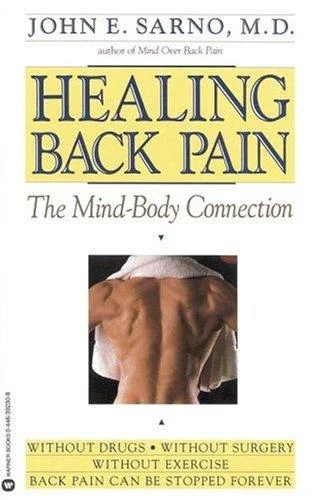
📚 Book - Healing Back Pain by Dr. John E. Sarno
For half of this month I could barely move or stand on my feet, and in between I was going through a round of tests. A good friend recommended this book, so I read it.
Sarno's idea is that a lot of chronic back pain is tied to stress and tension, something he called TMS (Tension Myositis Syndrome).
See you in October. Same table, fresh coffee.
I'm also here:
You made it all the way here... thank you for sharing this coffee with me ☕❤️
Ciao!
—Tanya
Liked this edition? Get the next one in your inbox, once a month.