
Hello coffee lovers! ☕
I'm writing these lines on a Friday. Friday the 13th.
Nothing fell on me. No black cat crossed the street.
But it made me curious (what doesn't?). Who decided that this one day is bad luck? And why do we keep believing it?
So this edition turned into a small collection of things we believe without checking. A cursed date. A word everyone "knows" is an acronym. And a man who believed, for 51 years, that half a city belonged to him.
Here's what's brewing on this month's menu:
- Superstition - Who's Afraid of Friday the 13th? 🐈⬛
- AI - The Chess Machine That Fooled Europe ♟️
- Language - The Long Road of the Word Swag 🎒
- Art - The King of Kowloon 👑
- Food & Drink - The Fortune Cookie Isn't Chinese 🥠
- Word Bites - Yuanfen 🔡
- November in History 🌍
- Recommendations 🍿
Superstition: Who's Afraid of Friday the 13th? 🐈⬛
↑ topThis month had a Friday the 13th.
And it wasn't the first one this year. February had one. March had one. November makes three, which is the most a single year can have. The next year with three is 2037.
Quick nerd moment 🤓
The rule is simple: any month that starts on a Sunday has a Friday the 13th. Every year gets at least one. And my favorite part: the 13th lands on a Friday more often than on any other day. 688 times in 400 years. The unlucky day is the most common one 😅
So where did the fear come from?
Short answer: the fear of Friday the 13th is only about 100 years old. Friday was unlucky, 13 was unlucky, and a 1907 novel put them together.
The popular answers are old and dramatic.
Thirteen people at the Last Supper.
The Knights Templar, arrested on Friday, October 13, 1307.
Nice stories. But historians can't find anyone who feared the combination before the 1800s. Friday was unlucky. Thirteen was unlucky. Nobody had put them together.
One of the first people on record is the composer Rossini (1792-1868). He considered both Fridays and the number 13 bad luck. He died on a Friday the 13th. In November. 1868.
Then came 1907, and a novel called Friday, the Thirteenth: a Wall Street broker uses the superstition to crash the market. It was a hit. And the date never recovered.
My favorite part is the people who fought back.
In the 1880s, a New York veteran named Captain William Fowler started the Thirteen Club. Thirteen guests at the table. Dinner on the 13th, at 8:13 pm. They walked under ladders to get to their seats and spilled salt on purpose. Five future American presidents were members.
It didn't help much. To this day, around 85% of tall buildings with Otis elevators have no button for the 13th floor.
And it's not even the same day everywhere. In Spain and Greece, the unlucky day is Tuesday the 13th. In Italy it's Friday the 17th, because the Roman numeral XVII can be rearranged into VIXI, Latin for "I have lived." In other words: my life is over.
There's even a word for the fear: paraskevidekatriaphobia. (Try saying that before coffee.)
And me?
Nothing happened to me this Friday the 13th. Really. Nothing.
But I did spend a good part of the day reading about some very weird things that happened on this date. And I'm not sure I'm out of that rabbit hole yet 🐇
AI: The Chess Machine That Fooled Europe ♟️
↑ topAI, AI, AI.
We hear it everywhere now. In every meeting, every ad, every app. Everything is suddenly "smart".
So let me take you back to the first "thinking machine" that made everyone say wow.
The Mechanical Turk was a chess "machine" built in 1770 that beat almost everyone for 84 years, with a human chess player hidden inside.
1770. Vienna.
A man named Wolfgang von Kempelen brings a strange thing to the palace of Empress Maria Theresa.
A big wooden box. On top, a chessboard. Behind it sits a life-size figure in a turban and a robe.
He opens the doors. Inside: wheels and gears, like a clock.
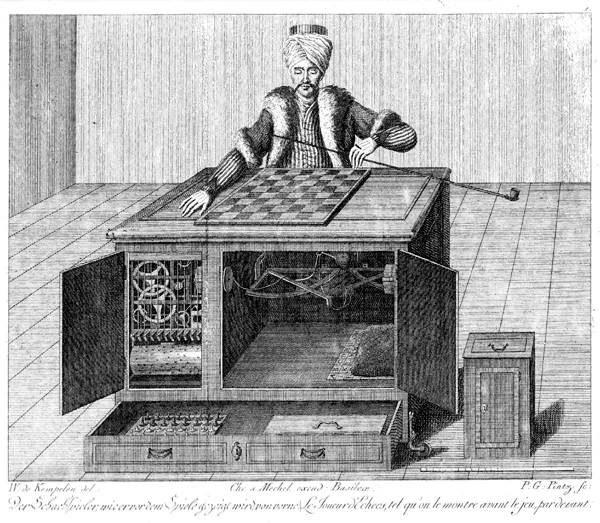
He closes the doors. And the machine starts to play chess.
And it wins.
People called it the Mechanical Turk.
For 84 years it was shown as a real machine, and it beat almost everyone who sat in front of it.
Benjamin Franklin lost to it.
Napoleon too. He tried to cheat, three times. The third time, the machine swept all the pieces off the board 😂
So how did it work?
It didn't.
There was a person inside. A real chess master, sitting on a sliding seat, playing by candlelight and following the pieces with magnets. When the doors opened, he slid to the other side.
In 1854 the machine burned in a fire. Three years later, the full secret came out.
And the name lived on. In 2005 Amazon opened a service where real people do the small jobs that computers can't. They called it Mechanical Turk. Their own words for it: "artificial artificial intelligence".
I spent part of my career in GenAI companies. So when I hear that something is "AI", I still ask one small question:
Who's inside the box? 😉
And you? What was the last "AI" thing that really made you say wow?
Language: The Long Road of the Word Swag 🎒
↑ topIt started next to the coffee. (Where else?)
I was at WeWork, talking to a guy I'd never met, and I asked him which company he was from.
He said the name. I didn't catch it.
So I asked if he had any swag on him. A shirt, a sticker, anything with a logo I could read 😅
He looked at me and asked: "Do you know where that word comes from?"
I didn't. And that's how it all started.
You know swag. The free t-shirt. The stickers on the laptop.
Swag.
And everyone "knows" where it comes from: Stuff We All Get.
Hah? Really? Mmmmm.... ok
BTW, it's totally made up.
The acronym was invented long after the word.
The word swag goes back to the 1500s, when it meant to sway or to sag. Over the centuries it became loot, then free branded stuff, then style.
- 1500s. To swag meant to sway or to sag. One dictionary from 1530 explains it with a belly: "I swagge, as a fatte person's belly swaggeth."
- Around 1595. Shakespeare adds an ending. In A Midsummer Night's Dream, Puck asks: "What hempen homespuns have we swaggering here?" The first swagger on record.
- 1700s and 1800s. London thieves pick it up. Swag becomes the loot, and the bag it sways in, like the cartoon burglar's sack.
- Australia. A swag is the bedroll a wandering worker carries, and he's a swagman. He's the hero of "Waltzing Matilda", Australia's unofficial anthem.
- Late 20th century. The loot goes corporate: all the free stuff you carry home from an event.
- 2000s. Hip-hop cuts swagger back to swag, and now it's how you carry yourself. Jay-Z had it in 2003, Soulja Boy turned his on in 2008, and by 2012 Justin Bieber had said it enough times to finish it off 😂
A bonus: engineers do have a real acronym. A SWAG is a "Scientific Wild-Ass Guess", a rough estimate when nobody has real numbers yet.
Want to see the vibe kind of swag at its peak? Here is Justin, 2012 😉
Art: The King of Kowloon 👑
↑ topI found this one in Google Arts & Culture. Yes, again 😅
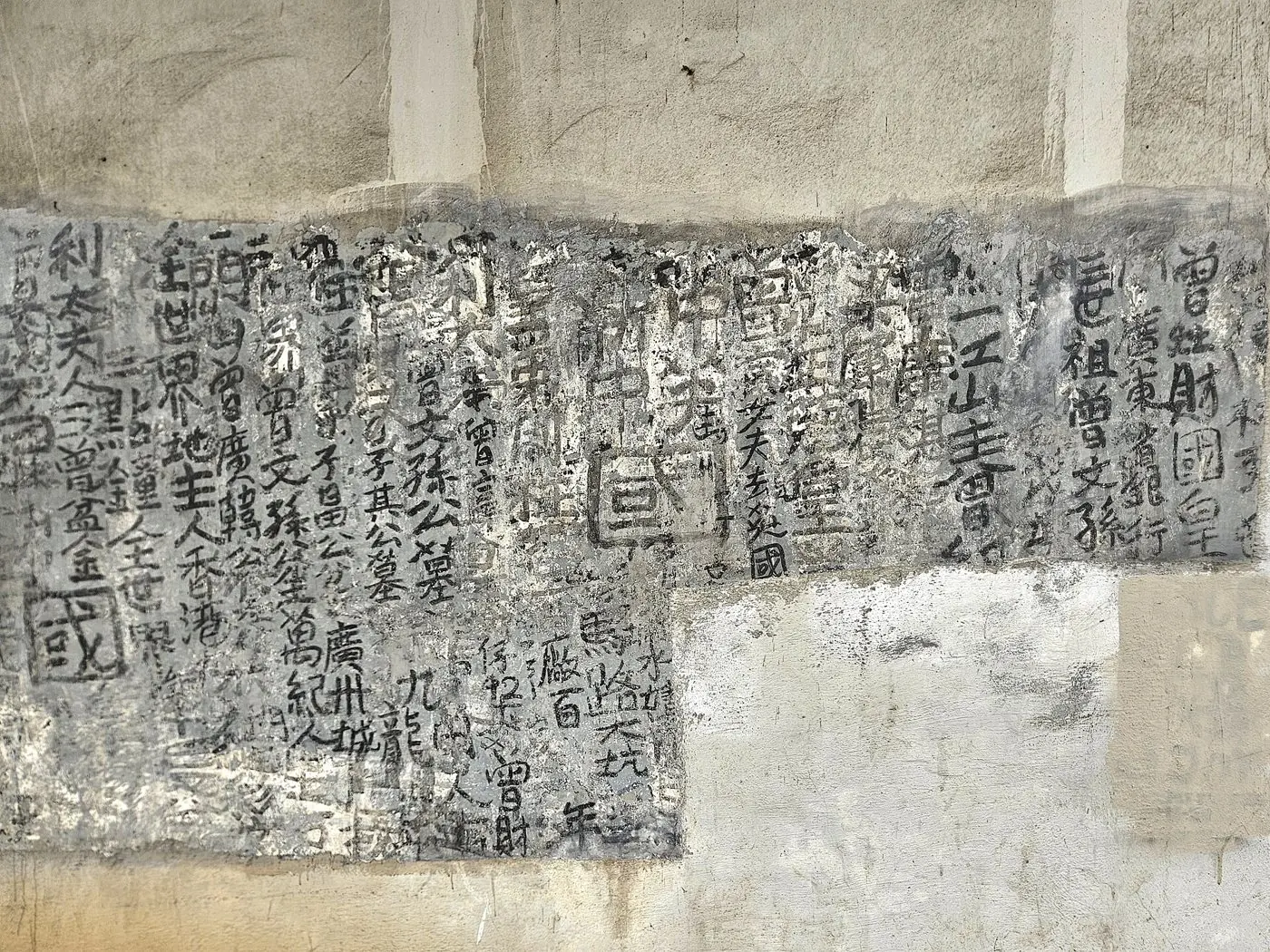
A wall and an electrical box on a street in Hong Kong. Both covered in black Chinese letters, from top to bottom.
It's called Wong Tai Sin, Hong Kong, after the neighborhood.
The man who wrote it was Tsang Tsou-choi. He had two years of school. At 16 he came to Hong Kong to work.
One day, the story goes, he found old family papers. They said that Kowloon, a big part of Hong Kong, once belonged to his family. Before the British took it.
Nobody ever found proof.
He didn't care. In 1956 he took a brush and a bottle of ink and started writing it on the city. Walls. Lampposts. Electrical boxes.
His name. His family tree. And his title: King of Kowloon.
He did it for 51 years.
The police arrested him a few times. His family thought he was crazy. He kept writing.
Then, in 1997, his writing got its first show in a gallery. In 2003 it was at the Venice Biennale.
He died in 2007, at 85. He left thousands of works on the streets. Only a few are left.
And one more thing. Wong Tai Sin is named after its temple, where people go to have their fortune read.
A neighborhood built around luck, in an edition that started with Friday the 13th 🍀
Food & Drink: The Fortune Cookie Isn't Chinese 🥠
↑ topStill in the East, but this time on a plate 🥠
I mean the little cookie that comes at the end of the meal, in every Chinese restaurant in every American movie.
So here's a surprise: the fortune cookie isn't Chinese.
It most likely comes from Japan.
In Kyoto, bakers have made a very similar cracker since the 1800s. It's called tsujiura senbei. A bit bigger, darker, made with sesame and miso. The little paper sits in the fold, not inside.
Japanese immigrants brought it to California. In the early 1900s, Makoto Hagiwara served it at the Japanese Tea Garden in San Francisco.
(Los Angeles says it was there first. In 1983 a court in San Francisco ruled on it. Guess who won 😂)
So how did it become Chinese?
One explanation: World War II.
More than 100,000 Japanese Americans were sent to camps, the cookie bakers among them. Chinese-American bakers stepped in. And the cookie stayed with them.
Today about 3 billion fortune cookies are made every year, most of them eaten in the US.
And in China? In 1992 the biggest maker tried to sell them there. It gave up. They were "too American".
My favorite part: in 2005, 110 people won the Powerball lottery in the same draw, about $19 million together. The lottery was sure someone had cheated.
Nobody did. They all played the "lucky numbers" from the back of a fortune cookie 🥠
A Japanese cracker, made in America, that the whole world thinks is Chinese.
What did your last fortune cookie say?
Word Bites 🔡
↑ topYuanfen (緣分) 🧵
Chinese. The invisible thread that brings two people together.
It's not exactly luck, and not exactly fate. Yuanfen is the reason you met this person, in this place, on this day. A friend. A love. A stranger next to the coffee machine.
There's an old saying: it takes hundreds of lifetimes just to share a boat ride with someone.
And sometimes you get the meeting without the staying. There's a phrase for that too: 有緣無份. You had the yuan, but not the fen.
Yuanfen joins the collection: all 29 Word Bites, in one place.
November in History 🌍
↑ top- November 10, 1969 - Sesame Street airs its first episode 🟡. Big Bird, Oscar and a street where every kid is welcome.
- November 12, 1990 - Tim Berners-Lee proposes the World Wide Web 🌐. A short document with a modest title: "WorldWideWeb: Proposal for a HyperText Project."
- November 21, 1783 - The first people fly, over Paris 🎈. Two Frenchmen go up in a hot air balloon and stay in the air for about 25 minutes.
- November 22, 1995 - Toy Story opens in cinemas 🤠. The first feature film made entirely on computers. To infinity and beyond.
- November 28, 1893 - Women vote in New Zealand 🗳️. The first country in the world where women vote in a national election.
Recommendations 🍿
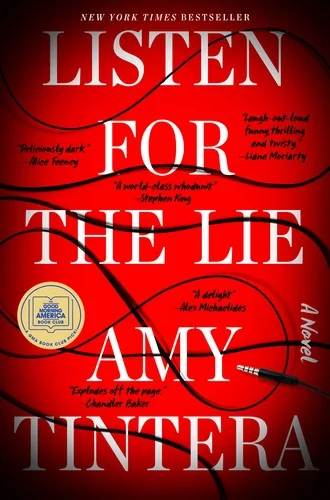
↑ top📚 Book - Listen for the Lie by Amy Tintera
Lucy was found covered in her best friend's blood, with no memory of that night. Five years later, a podcaster reopens the case.
🎧 Audiobook - Greenlights by Matthew McConaughey
35 years of diaries, read by the man himself. Listen, don't read.
📺 Series - MobLand, Season 2 (Paramount+)
Tom Hardy cleans up after a London crime family. Guy Ritchie again, after The Gentlemen in #43. Finale on November 20.
📺 Series - The Diplomat, Season 4 (Netflix)
Keri Russell is back as the ambassador who is better at a crisis than at a cocktail party. Eight episodes, all out.
Wrap-Up ☕
↑ topThat's #45.
See you in December. Same table, fresh coffee.
I'm also here:
You made it all the way here... thank you for sharing this coffee with me ☕❤️
Ciao!
—Tanya
Liked this edition? Get the next one in your inbox, once a month.