
Hello coffee lovers! ☕
October. The month everything starts shifting. 🍂
The light turns softer. The first rain finally showed up (yay!!). And somewhere between the heat breaking and the sweaters coming out, I can feel something changing in me too.
On the work side, a few good projects came to an end this month. The kind you finish with a deep breath and a little pride. So right now I'm standing in that in-between space: one door closed, the next one not open yet. I'm excited about what's next, and a little afraid too.
I never really liked this part (imagine, someone who loves closing things). Now I'm learning to stay in it. (Some call it manifesting. I call it making room.) And I always remember that this is the journey I chose, at least for now. So I just keep going.
So consider this my open window. Starting something new? Know someone who is? I'm here. ☕
Maybe it's a website that finally says what you actually do. A portal or an internal system built around the way your team works. A product review or a product strategy, when you need someone to look at it with fresh eyes. Or career mentorship, if you're changing direction, looking for your next role, or just want your confidence back.
I know how to tell your story in the clearest way. Let's talk.
Here's what's brewing on this month's menu:
- Art - Lines That Feel 🎨
- Jazz - A National Park for a Sound 🎺
- Aviation - Where Wingman Came From ✈️
- Fashion - Woven Words 🧵
- Food & Drink - Liquid Gold 🫒
- Word Bites - Petrichor 🔡
- October in History 🌍
- Recommendations 🍿
Art: Lines That Feel 🎨
↑ topI truly believe almost everything we do is a kind of art. A meal, a conversation, a website, a product. The way we talk, the way we write, the way we move. All of it.
That's probably why I keep coming back to art, just to remember what something made with care feels like. A lot of my inspiration, for work and for life, starts in a museum, a gallery, or a random painting on my phone.
Even while I work, I sketch things out as I go.
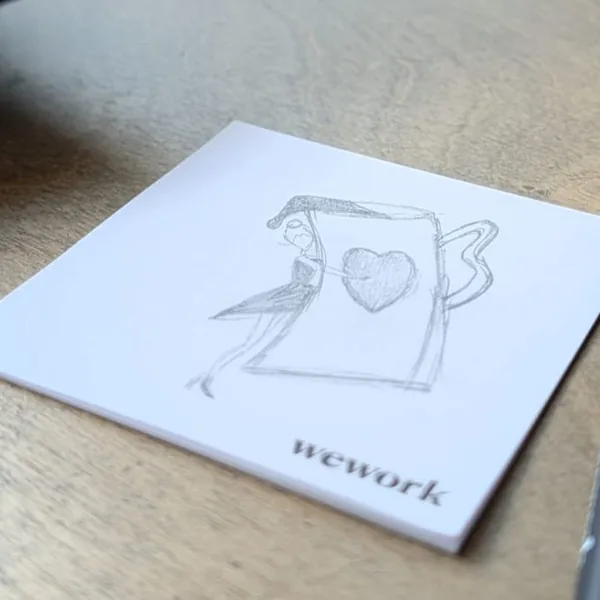
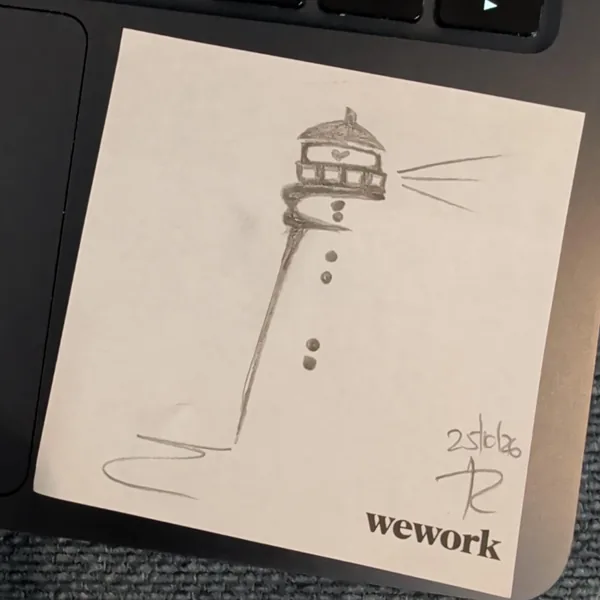
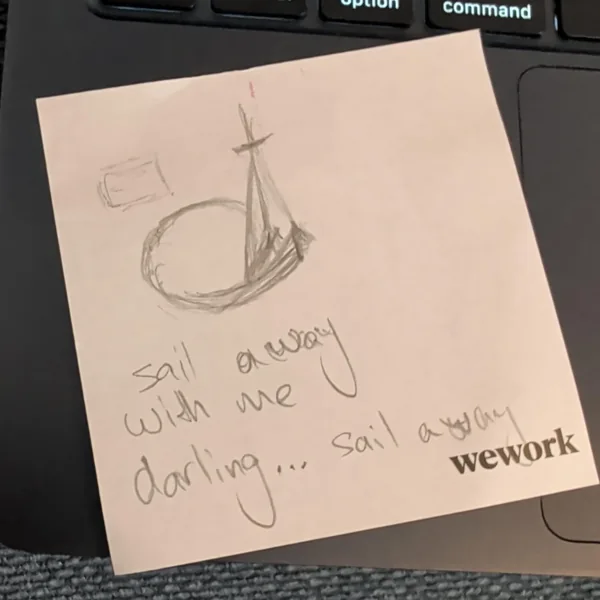
In 1947, a French painter named Georges Mathieu needed a word for paintings that felt more than they explained. Read that again: felt more than they explained.
He landed on lyrical abstraction: art driven by gesture, color, feeling. (Kandinsky had been doing it for decades already, but he didn't have the label.)
It was a quiet rebellion against the rulers and the right angles, against painting as a system.
Let's jump to 1998. An artist whose name nobody kept makes this:
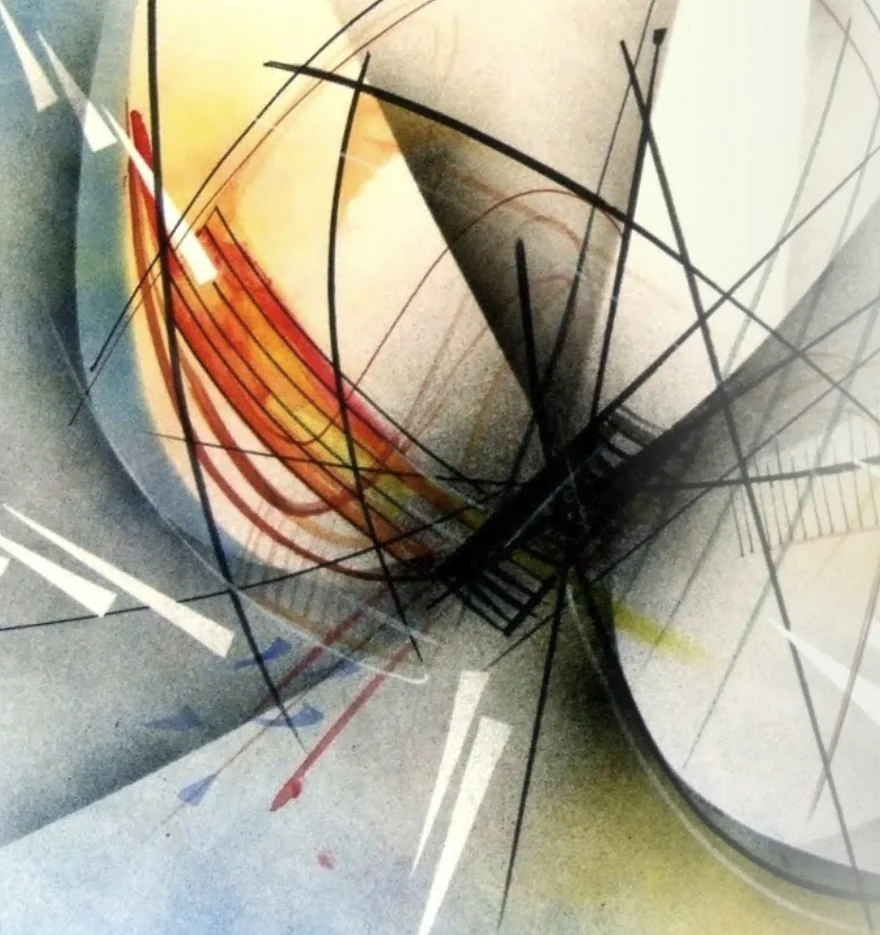
Straight lines, sharp triangles, arcs drawn like they were measured. And yet it doesn't feel measured at all. The color does something the geometry can't.
Orange melting into red, a soft blue-grey haze. One interpretation sees a candle in it, flame and wax. It took me a moment, but in the end I saw it. Do you?
Why did it speak to me? It's the balance I always look for in my own work: some kind of grid, a table, logic and structure on the surface, and underneath, something that feels very human.
I found this whole story in Culture Weekly, inside Google Arts & Culture, the app I already wrote about in #42. Untitled, anonymous, and still lyrical.
Jazz: A National Park for a Sound 🎺
↑ topMost national parks protect something you can see. A canyon. A forest. A coastline.
In 1994, the U.S. Congress made one for a sound.
A sound?! Yes, yes, you read that right. A sound.
The New Orleans Jazz National Historical Park became law on October 31, 1994.
Its job, more or less: protect the roots of jazz, and let people hear it in the places where it was born. Some of the rangers don't just give tours, they play. How cool is that?!
I love jazz. All of it. It plays in the background almost every day while I work or read. YouTube is full of these long jazz sessions with a crackling fireplace or a smoky 1920s bar, and after ten minutes I feel like I'm in a movie 🎬 A few of my favorites: by the fireplace, in a 1920s manor at midnight, and in a rainy jazz café.
But New Orleans jazz is the one that grabs me hardest, straight in the heart.
This week's Culture Weekly pulled up something I didn't expect. Not a painting. Paperwork.
The park's management records from 1992 to 2007. Leases, ordinances, agreements, receipts for filing. Letters with three different mayors about where to put the offices.
Boring, right?
And yet.
Fifteen years of people trying to fit something wild into a filing cabinet.
Jazz was never really about a building.
Go back two centuries. By 1817, city law allowed enslaved people to gather only on Sunday afternoons, in one open field. They called it Place Publique.
Later, Congo Square. Drums. Dance. Rhythms carried from West and Central Africa, some by way of Haiti and Cuba. Every Sunday. Until sunset 🌅
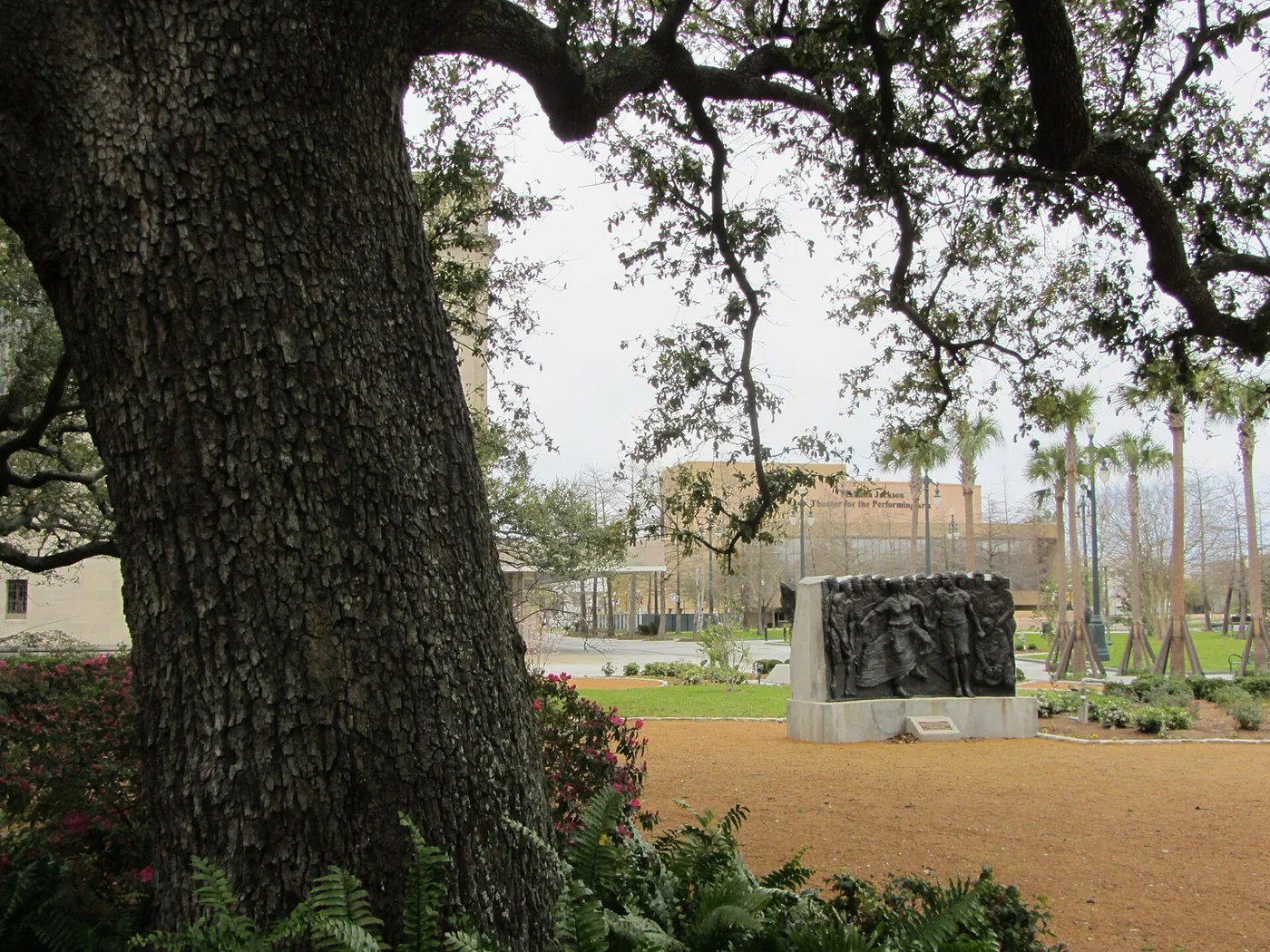
That square sits inside Louis Armstrong Park today. The same park where the jazz park set up its visitor center.
Now look at those dates again: 1992 to 2007. Right in the middle, on August 29, 2005, Hurricane Katrina hit New Orleans. The levees that held back the water failed, and most of the city flooded. Hundreds of thousands of people had to leave, musicians among them. Suddenly, the sound of a whole city was scattered across the country.
That fall, the brass bands came back to the streets for the first big second line since the storm. (A second line is a New Orleans street parade: the band marches in front, and everyone who joins behind it, dancing and waving umbrellas and handkerchiefs, is the "second line.") In January 2006, the city's social aid and pleasure clubs marched together in one enormous parade, for everyone's right to come home.
And that's the magic of a jazz funeral. It starts slow, with a dirge and heavy feet. Then, on the way back from the cemetery, the band picks up, the second line joins in, and the umbrellas open. Grief, then joy. Every time.
Aviation: Where Wingman Came From ✈️
↑ topOne day I was sitting and playing a game that clears my head, when suddenly I won a card.
On it: a butterfly. And one word. Wingman.
I stared at it longer than I should have. Wings... butterfly... is that where it comes from?
(Spoiler: no, no butterflies. But we all know I had to find out.)
So I started digging ⛏️
Turns out, wing had nothing to do with butterflies for a long time. Since around 1400, English used it for the two sides of an army in battle, the troops on the far left and the far right. Later, for the sides of a theater stage. (Hence actors waiting "in the wings," just offstage.)
Then came the airplanes.
Fighter pilots learned fast that flying alone was a good way to die. So they flew in pairs. One leads. The other flies just off the leader's wing, slightly behind, watching the sky the leader can't see.
Hence the name: the one flying on your wing is your wingman. The word was in print by 1943, in the middle of World War II.
The story goes that Erich Hartmann, the highest scoring fighter ace in history, flew more than 1,000 combat missions and never lost a single wingman. Not one.
Then came Top Gun, in 1986, and the word flew straight out of the cockpit and into the bar.
So no, it's not about the butterfly. But I kind of like that the card got it a little wrong 🦋
Because in the end, we all need someone on our wing. Someone who stands slightly behind and sees what we can't. A friend, a partner, a sister, a parent. So who's your wingman? (Or wingwoman 😉)
Fashion: Woven Words 🧵
↑ topParis Fashion Week, Spring/Summer 2027. Nine days. 68 shows.
I watched more of it than I'd like to admit. Collection after collection. Silk that moved like water. Wool that looked carved. Fabrics I wanted to touch through the screen.
Then, the same week, I was listening to Adi Shilon's podcast, Ahavti. Her guest, Ariela Wertheimer, was talking about textiles, and she said something that stopped me mid-walk:
The word textile comes from the word text.
What?!
Of course I went to check 😆
She was right. Both come from the Latin texere: to weave, to join, to build. A textus was, literally, a thing woven.
The old scribes worked so carefully, line after even line, that the written page started to look like cloth. So they called it that: a text.
And the family doesn't stop there: Texture. Tissue. Context, things woven together. Pretext, something woven in front, to hide what's behind.
Even technology and architecture share the same ancient root, from the Greek words for craft and builder. (I've spent 12 years in tech. Apparently I was weaving the whole time.) There's a reason I say I create.
And honestly, that's how my work feels: a product, a website, software. Many small threads, woven together until they become one whole cloth that holds.
Food & Drink: Liquid Gold 🫒
↑ topThe first rain came, and here (in Israel) it means one thing: olive season. Nets spread on the ground, ladders leaning against the trees, whole families combing the branches with their fingers.
Confession: I don't have a single meal without olives on the side. And olive oil is the only oil in my kitchen, for cooking and for baking. Well, almost. Sunflower oil still goes into my salad, a little memory from childhood.
We've been doing this for 8,000 years. At Ein Zippori, in the Lower Galilee, archaeologists found traces of olive oil in pottery from around 5,800 BCE. It may be the earliest evidence in the entire Mediterranean.
By the 7th century BCE, Ekron, near today's Kibbutz Revadim, was the biggest olive oil factory of the ancient world, with more than 100 presses. And the detail that stopped me: the same workshops pressed oil four months a year, and wove cloth the other eight. (This edition keeps weaving itself.)
🎥 Watch: Making olive oil like in biblical times, at Neot Kedumim
So remember: every time you eat an olive, you're eating 8,000 years of history. And it still tastes like home.
Word Bites 🔡
↑ topPetrichor. English, built from Greek. The smell of rain on dry earth. 🌧️ In 1964, two Australian scientists gave it a name: petra, stone, and ichor, the golden fluid in the veins of the Greek gods. The blood of the gods, rising from the stone.
The science is a little less poetic: bacteria in dry soil make a compound called geosmin, and the first rain lifts it into the air.
Petrichor joins the collection: all 28 Word Bites, in one place.
October in History 🌍
↑ top- October 1, 1971 - Walt Disney World opens its gates in Florida 🏰.
- October 14, 1926 - Winnie-the-Pooh is published, and a bear of very little brain teaches the world a lot about friendship 🍯.
- October 20, 1973 - The Sydney Opera House opens, sails and all 🎶.
- October 23, 2001 - Apple introduces the iPod. 1,000 songs in your pocket 🎧.
- October 28, 1886 - The Statue of Liberty is dedicated in New York Harbor 🗽.
Recommendations 🍿
↑ top📺 Series - Lanterns (HBO Max)
For the DC lovers 💚 I'm more of a Marvel person, but this one turned out really good. Two Green Lanterns, one murder in small-town Nebraska. Less space opera, more True Detective with rings.
🎬 Film - Love of Your Life (Prime Video)
A Boston nurse, a love that changes everything, and the long road back to her own life. Margaret Qualley, my favorite, I've loved her since The Leftovers. A very moving film, I really enjoyed it. (Yes, that's Aaron Pierre again.)
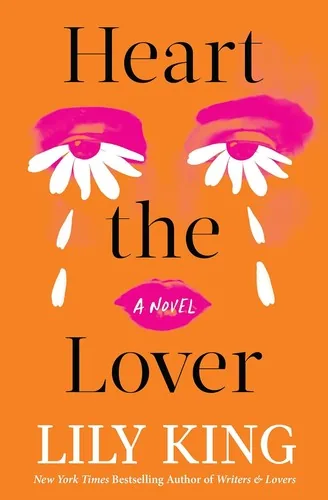
📚 Book - Heart the Lover by Lily King
Senior year, two brilliant boys, and a knock on the door decades later. A truly gripping book. Keep tissues close.
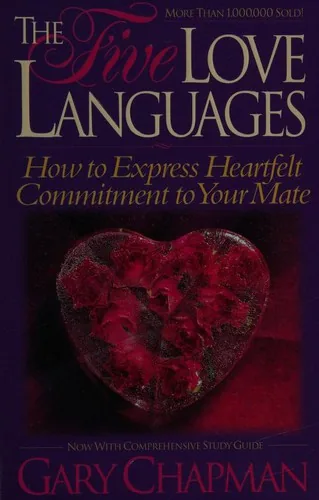
📚 Book - The 5 Love Languages by Gary Chapman
Five ways we give love, five ways we hope to get it back. Most fights in love aren't about love. They're translation errors. I really recommend it, for couples, but not only.
Wrap-Up ☕
↑ topThat's #44.
The air finally changed this month. You can feel it in the mornings (I feel it on my morning rides), in the first rain, in the way the light goes soft a little earlier every day. 🍂
It's been a heavy few weeks around here, and I'm not going to get into it. Some things don't need another opinion. They need a sweater, a slow morning, and someone to share a coffee with.
So here's my prescription for November: dig the warm clothes out of the closet. Bake the pumpkin cake you keep saving for later (or just order the pumpkin spice latte, no judgment 🎃). Call the person who makes you feel like yourself.
Seasons change. So do we. Slowly, like an olive tree.
See you in November. Same table, fresh coffee.
I'm also here:
You made it all the way here... thank you for sharing this coffee with me ☕❤️
Ciao!
—Tanya
Liked this edition? Get the next one in your inbox, once a month.